
Implant Case Planning

Plan the restoration first, then place the implants to serve it. We review the records with the dentist before a drill ever touches bone.

Most implant problems that land on a lab bench were not surgical failures. They were planning failures — an angulation that forces a cement-retained compromise, screw access through an incisal edge, an emergence profile that no abutment can rescue.

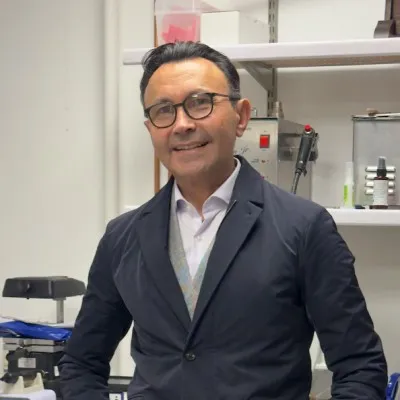
Jahn De Khudikine, Founder · Universal Dental Lab
Jahn De Khudikine Founder · Universal Dental Lab

Why send it here

A plan is a promise to the surgeon. We plan it with you.

A practice's schedule lives or dies by the lab — I've watched one late case push back a whole day of chair time.

So I still know the cases moving through this lab, and I answer for how each one is made. Send a case here and it doesn't drop into a queue — it lands with me and one technician who carries it start to finish.

Start a case
You approve first
Nothing is produced until you sign off Revisions at that stage cost only a conversation
Restoratively driven
Virtual wax-up first, implants serve it Bone volume constrains the plan, not defines it
Your technician
One planner holds your case Reach them directly — no call-center queue
Free scanner
3Shape TRIOS 6 for partners Go fully digital at no cost
Universal Dental Lab Implant case sheet

What to send with the case

  • CBCT scan (DICOM)
  • Intraoral scan, both arches (STL)
  • Bite registration
  • Photographs
  • Implant system and platform
  • Planned restoration type
  • Existing prosthesis or wax-up, if relevant

If something is missing or contradictory, you hear from us the same day.

How We Work With You

The Implant Position Is a Restorative Decision

Planning a case with the lab moves those decisions to the point where they are still cheap. We take your CBCT and intraoral scan, build a virtual wax-up of the final restoration, and position the implants to support it.

The plan
Restoratively driven. We place a virtual wax-up first, then position the implants to serve it — bone volume constrains the plan, it does not define it.
Approval
Nothing is produced until you sign off, and revisions at that stage cost nothing but a conversation.
The guide
Tooth-, tissue- or bone-supported depending on the situation, printed in biocompatible resin and checked against the plan before it ships.
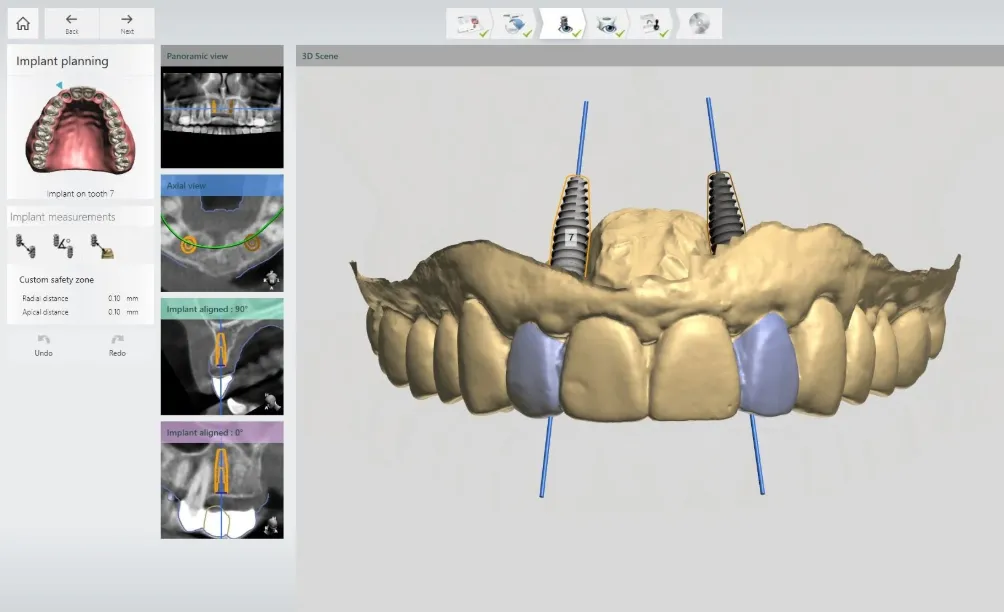
Guided implant planning software: panoramic and axial CBCT views beside the 3D scene, with the planned implant positions and custom safety zones on the maxillary arch.
Restoratively driven planning — implant positions checked against the 3D scene and CBCT before anything is proposed.

The Review

What We Review Before Proposing Anything

Bone volume and density at each site, the position of the sinus floor and the inferior alveolar canal, available restorative space against the opposing dentition, soft tissue thickness, and whether the records you sent actually agree with each other.

  • Restorative space: The most common surprise — a plan that works in bone but leaves no room for the prosthesis.

  • Angulation: A site that permits a screw-retained crown at one inclination and forces cement at another. We show you both options and the trade-off rather than quietly picking one.
Learn more
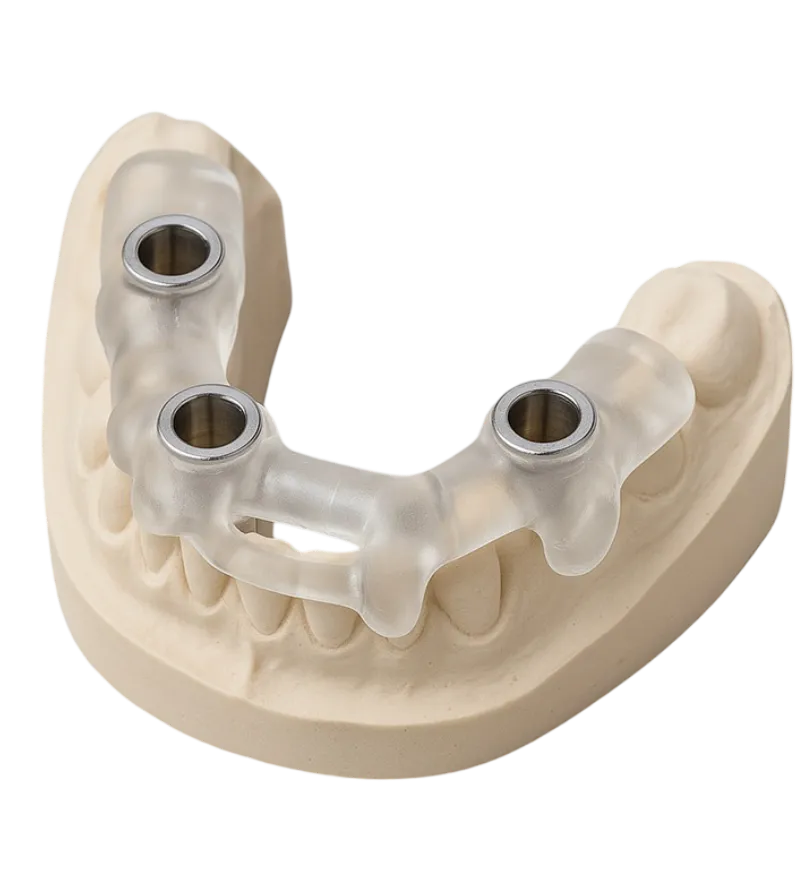
Clear printed surgical guide with metal guide sleeves, seated on a stone working model of the arch.
Printed surgical guide with guide sleeves, seated on the working model.

Guided Surgery

From Approved Plan to Printed Guide

Once you sign off on the implant positions, we design and print the surgical guide in biocompatible resin and prepare the prosthetic components alongside it. The surgical phase and the restorative phase are planned as one case, not two.

  • Support: Guides are tooth-, tissue- or bone-supported depending on the situation.

  • Verification: Every one is checked against the approved plan before it ships.

Learn more

Complex and full-arch cases

For full-arch and hybrid work the planning burden is heavier and the tolerance for improvisation is lower. Those cases run through the same process with additional prosthetic staging — see full arch case planning for how All-on-X work is handled.

The Process

How a Planned Case Moves

Five steps between the practice and the lab. Nothing gets produced until you approve the plan.

  1. You send the records

    Practice

    CBCT (DICOM), an intraoral scan of both arches, a bite registration, and photographs. Tell us the implant system, the planned restoration and anything the anatomy is going to argue with.

  2. We review before we plan

    Lab

    We check bone volume, the position of the sinus and the inferior alveolar canal, the restorative space, and whether the records are complete. If something is missing or contradictory, you hear from us the same day.

  3. Restoratively driven plan

    Lab

    We place a virtual wax-up first, then position the implants to serve it — not the other way around. Angulation, depth, emergence profile and screw access are decided against the final restoration.

  4. You review and approve

    Practice

    You get the plan with the proposed implant positions and the restorative rationale. Nothing is produced until you sign off, and revisions at this stage cost nothing but a conversation.

  5. Guide and prosthetics produced

    Lab

    On approval we design and print the surgical guide, and prepare the provisional or final prosthetic components so the surgical and restorative phases line up.

What a planned case actually buys you

  • A plan you can defend

    Implant positions are driven by the final restoration, so screw access lands where you want it and the emergence profile is decided before surgery, not after.

  • Problems surfaced early

    Insufficient restorative space, an angulation that forces a cement-retained compromise, a thin buccal plate — we raise these while they are still cheap to fix.

  • One lab, start to finish

    The team that plans the case designs the guide and makes the prosthesis. Nothing is lost in a handoff between vendors.

Start a case

Send one case. Keep the scanner.

Open a partner account and your first case moves with a shade record and our remake guarantee — if a unit does not seat, we redo it at no charge.

  • Free 3Shape TRIOS 6 scanner for active partners
  • Under-2% remake rate — remakes at no charge
  • One named technician you reach directly — no call center

Prefer to talk? +1 747-268-0808

No call center — you hear back from the lab, not a bot.

Planning FAQ

Implant Case Planning — Questions Dentists Ask

Before the CBCT is taken, if you can. Once the scan exists, the restorative plan is the thing that determines whether the implant position is usable, and that is the conversation we can help with. Practically, most practices send us the CBCT and intraoral scan together and we come back with a plan before any surgical date is set.

A CBCT in DICOM format, an intraoral scan of both arches in STL, a bite registration, and photographs. Tell us the implant system and platform you intend to use, along with the planned restoration — single unit, bridge or full arch. If an existing prosthesis or a diagnostic wax-up matters to the plan, send that too.

Upload a digital file

It means we design the final restoration first and then place the implants to support it. The alternative — placing implants where the bone is easiest and building a restoration around the result — is what produces bad screw access, unfavorable angulation and emergence profiles that never look right. Bone volume constrains the plan; it does not define it.

Usually, yes. We work across the major implant platforms and their component libraries. Send us the system and platform details with the case and we will confirm compatibility before planning. If a library is unavailable we will tell you up front rather than proceed and improvise.

Planning terms depend on the scope of the case and are quoted before work begins, so there are no surprises if a patient declines treatment.

Partner Offer

A Free Intraoral Scanner for Partner Practices

Partner with Universal Dental Lab and we place a 3Shape TRIOS 6 Wireless in your operatory — free for the length of our partnership. Scan the prep, send it in seconds, and skip impressions entirely.