Digital Smile Design (DSD)

Facially driven esthetic planning for dentists — the smile designed against the face, agreed on a proof, and carried into the wax-up and final work.

Digital smile design is facially driven planning: the anterior teeth are positioned against the midline, the lip line and the proportions of the face, rather than designed in the arch alone. It moves the agreement on the esthetic result to the front of the case.

Jahn De Khudikine, Founder · Universal Dental Lab
Jahn De Khudikine Founder · Universal Dental Lab

Why send it here

You decide the smile. We answer for the design.

A practice's schedule lives or dies by the lab — I've watched one late case push back a whole day of chair time.

So I still know the cases moving through this lab, and I answer for how each one is made. Send a case here and it doesn't drop into a queue — it lands with me and one technician who carries it start to finish.

Start a case
Against the face
Facially driven — midline, lip line, and proportion Photographs do the work a scan alone cannot
Agreed before prep
Edge position and proportion signed off on a proof The esthetic target decided before any tooth is touched
Your technician
One person holds your case Reach them directly — no call-center queue
Free scanner
3Shape TRIOS 6 for partners Go fully digital at no cost

Digital Workflow

From Photographs to a Signed-Off Design

Four steps, with your approval before the design carries into production.

  1. Send Records

    Upload calibrated photographs — full face, retracted, and smile views — an intraoral scan of both arches, and video if you have it. Note the midline, any reference points and the changes you want.

  2. Facial Analysis

    We analyze the smile against facial reference lines — midline, incisal plane, lip dynamics and proportion — to establish where the teeth should sit.

  3. Design Proof

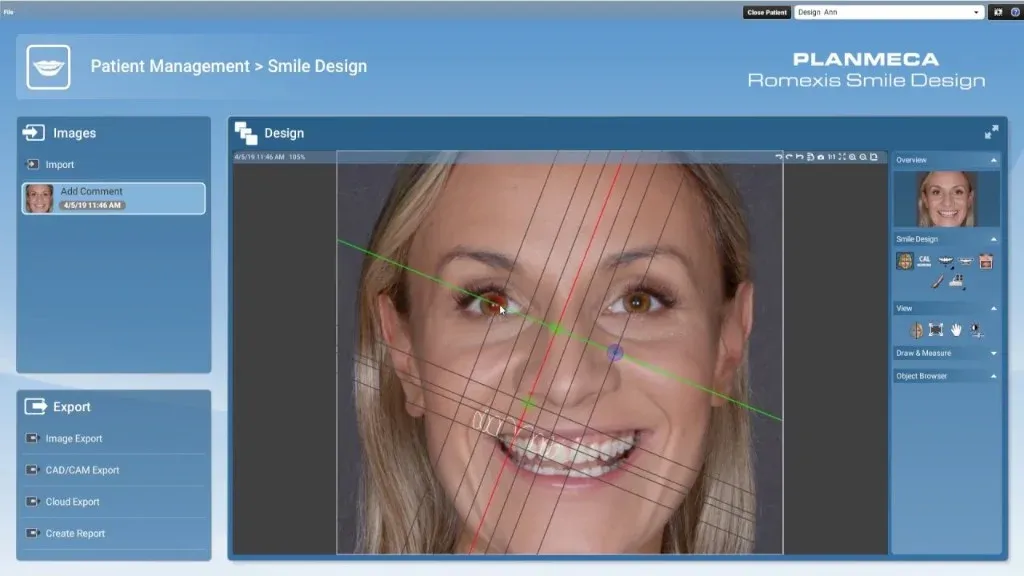
    You receive a smile design proof showing proposed edge position, proportion and arrangement, ready to review and adjust with us.

  4. Carry It Forward

    On approval the design feeds the digital wax-up, mockup or provisional, so the plan you signed off on is what gets built.

Records
Calibrated photos + STL scan
Analysis
Referenced to the face
Output
A design proof you sign off
Turnaround
Quoted per case at intake
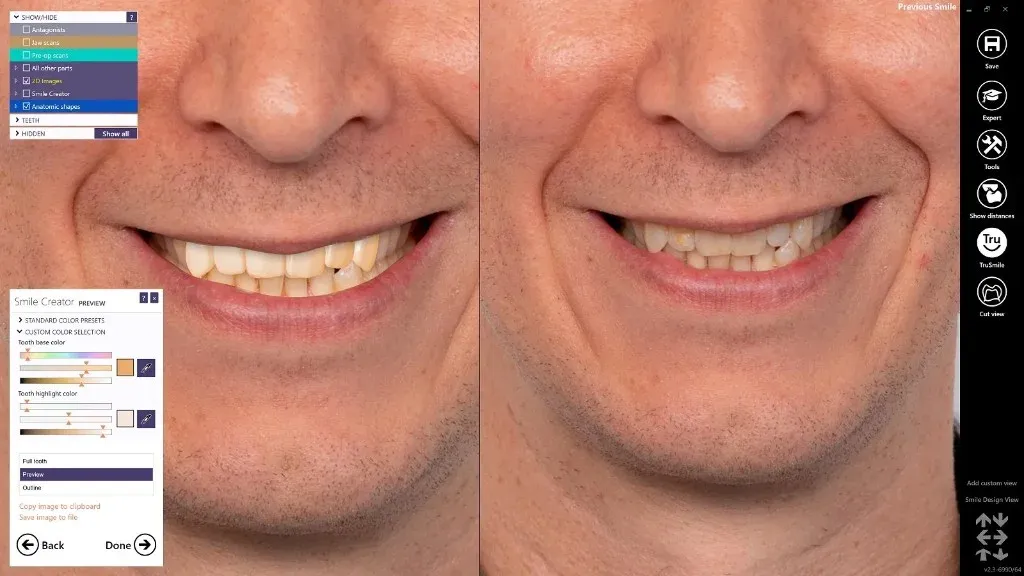
Smile design proof on screen beside the patient’s full-face smile photograph

Overview

Digital Smile Design for Clinical Workflows

Digital smile design is facially driven planning: the anterior teeth are positioned against the midline, the lip line and the proportions of the face, rather than designed in the arch alone.

For anterior and esthetic cases, the risk is not fabrication — it is agreeing on the result. DSD moves that agreement to the front of the case. From your photographs and scan we build a smile design that shows proposed edge position, proportion and arrangement, so you and the patient decide the esthetic target before any tooth is touched.

  • Where esthetics drive the case: Veneers, anterior crowns, smile makeovers, and full-mouth rehabilitations that change vertical dimension.

  • Not a picture set aside: The design becomes the blueprint the wax-up, mockup and final restorations are built from.
Learn more
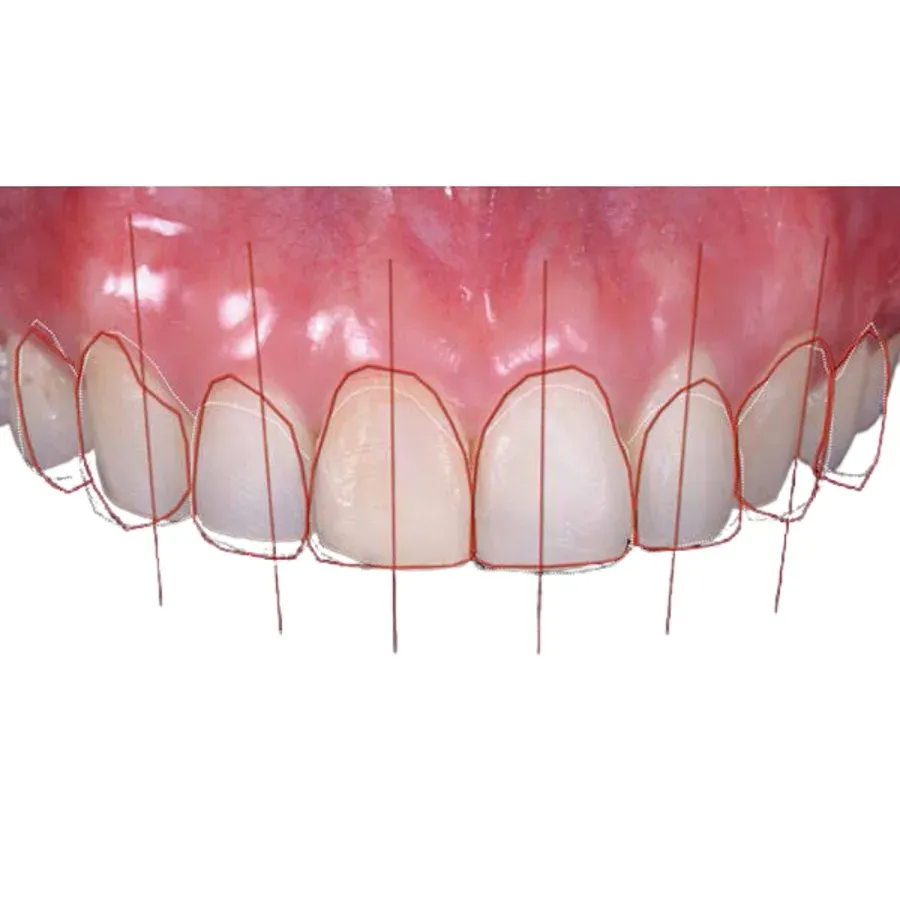
Retracted and smile photos with midline and incisal-plane guidelines overlaid

Facially Driven

The Smile Is Designed Against the Face

We analyze the case against facial reference lines — the midline, the incisal plane, lip dynamics and dental proportion — to establish where the teeth should sit before we design a single contour. Photographs do the work a scan alone cannot.

  • Referenced to the face: Midline and incisal plane referenced to the face, with proportion and symmetry planned across the anterior.

  • Lip dynamics in the frame: Considered from smile photographs or a short video, not the arch in isolation.

Learn more
Chairside screen showing the DSD visual during the patient consultation

Case Acceptance

A Visual the Patient Understands

A facially driven design gives the patient something concrete to respond to, which makes the treatment conversation easier and the expectations clearer. Cases are accepted on what will actually be built, not on a verbal description.

For you, that shared reference means fewer surprises at try-in and a plan every later stage can be measured against.

  • Accepted on what gets built: The patient responds to a facially driven visual, not a verbal description.

  • One reference the case runs on: Every later stage is measured against the plan you both signed off on.

Learn more

Case Types

When DSD Earns Its Place

Anywhere the esthetic result has to be agreed before the prep, not discovered at try-in.

Anterior Esthetic Cases

Single central to canine-to-canine cases where midline, incisal edge position and proportion have to be right.

Veneer & Smile Makeovers

Multi-unit anterior work planned against the face before any tooth is prepared.

Full-Mouth Rehabilitation

Cases that change vertical dimension or occlusal scheme, where the esthetic plan and the functional plan have to agree.

Case Acceptance

A facially driven visual the patient can understand, so the treatment conversation happens before the handpiece comes out.

Restorative Blueprint

A design that carries forward into the wax-up, the mockup, the provisional and the final restoration.

Interdisciplinary Planning

A shared esthetic reference for ortho, perio and restorative phases of the same case.

Method Selection

When to Reach for DSD

  • Anterior esthetic cases — single central to canine-to-canine
  • Veneer and multi-unit anterior smile makeovers
  • Full-mouth rehabilitation that changes vertical dimension
  • Cases where patient case acceptance hinges on a clear visual
  • A restorative blueprint that carries into the wax-up and mockup
  • Interdisciplinary cases needing one shared esthetic reference

For a smaller single-unit case a shade and photo brief may be enough — DSD earns its place where the whole anterior arrangement is on the table.

Advantages

Why Plan the Smile Digitally

  • Designed Against the Face

    Facially driven planning positions the teeth to the midline, lip line and facial proportions — not to the arch in isolation.

  • Predictable Esthetics

    Edge position, proportion and symmetry are decided and agreed before prep, so the final result is planned rather than hoped for.

  • A Proof You Can Review

    You get a design proof on screen — midline, edge position, proportion — so revisions happen before anything is milled or layered.

  • Feeds Wax-Up and Mockup

    The approved design becomes the reference for the digital wax-up and chairside preview, so the plan survives every stage.

Where DSD earns its place

For anterior and esthetic cases, the risk is not fabrication — it is agreeing on the result. DSD moves that agreement to the front of the case, so you and the patient decide the esthetic target before any tooth is touched.

Records & Quality

Records, Design, and Quality Control

Records That Make or Break the Design

A facial analysis is only as good as the photographs behind it. Calibrated full-face, retracted and smile images — well lit and in focus — are what let the design translate to the face. A scan gives us the teeth; the photographs give us the person.

Read the full quality process Show less

Design Review and Communication

The design proof is where you refine edge position, proportion and arrangement with us. We treat your esthetic judgment as the deciding vote and bring the analysis and digital tooling to support it.

Continuity Into Restoration

Because the approved design drives the digital wax-up and the mockup, the esthetic intent is preserved from the first proof through to the seated restoration — no reinterpretation at each handoff.

Case Submission

What to Send With a DSD Case

Photographs first, then the scan. Get the images right and the design falls into place.

Required records:

  • Calibrated full-face smile, retracted and close-up photographs
  • Intraoral scan of both arches (STL)
  • Bite registration
  • Midline reference and esthetic notes

Helpful extras: a short video of the patient speaking and smiling, existing restoration or shade references, and any patient requests. The most common delay is poorly lit or uncalibrated photographs — when in doubt, re-shoot before you send. New to the lab? Open an account to start your first case.

Why Universal Dental Lab

Why Clinics Choose Us for DSD

  • Facial References First

    We design against midline, lip line and proportion — not an isolated arch view that ignores the face.

  • Explicit Design Proof

    Edge position and arrangement are written into a proof you approve, so the plan does not drift between technicians.

  • Same Lab Through Final

    The team that designs the smile can build the wax-up, the mockup and the final anterior restorations.

Start a case

Send one case. Keep the scanner.

Open a partner account and your first case moves with a shade record and our remake guarantee — if a unit does not seat, we redo it at no charge.

  • Free 3Shape TRIOS 6 scanner for active partners
  • Under-2% remake rate — remakes at no charge
  • One named technician you reach directly — no call center

Prefer to talk? +1 747-268-0808

No call center — you hear back from the lab, not a bot.

DSD FAQ

Digital Smile Design — Questions Dentists Ask

Facial reference — lip line, smile width, and proportion tied to the face, not just the cast. Photographs and optional video drive where incisal edges and papilla levels should sit relative to the patient’s smile, then the scan anchors that plan in occlusion. The deliverable is an approvable esthetic proof that exports to wax-up, mockup, and restorations.

Calibrated full-face smile, retracted frontal, and close-up views, ideally with consistent lighting and the head in natural posture. A short clip of speech or smiling helps with dynamic lip display. Tell us the midline reference and what the patient wants changed; poor photos force guesswork and extra revision rounds.

How to send a file

That depends on how defined the goal is upfront. A clear brief and good photos often settle in one or two rounds; exploratory makeovers with competing references take more. We revise on the proof until you sign off — that approval is what the wax-up and mockup are built from.

DSD ends at the approved digital plan — edges, proportions, and arrangement you accept on screen. The mockup is the physical trial smile so the patient confirms feel and speech before prep. Most smile makeovers run DSD first, then digital wax-up, then mockup; preview-only cases can skip DSD if contour is already agreed.

Smile preview mockups

Yes, when the esthetic goal has to agree with occlusal and vertical changes. Share the rehab plan — existing VDO, guidance goals, and which phases are immediate — so the smile design does not propose lengths the posterior scheme cannot support. Larger cases often start with a smile design consultation or complex case review.

Smile design consultation

Partner Offer

A Free Intraoral Scanner for Partner Practices

Partner with Universal Dental Lab and we place a 3Shape TRIOS 6 Wireless in your operatory — free for the length of our partnership. Scan the prep, send it in seconds, and skip impressions entirely.