

Screw-Retained Crowns

No cement, and it comes off intact — implant crowns screwed straight to the fixture, with access channels designed to exit where the dentist can live with them.

Two problems disappear the moment a crown is screwed rather than cemented: you can take it off without destroying it, and there is no cement to leave behind subgingivally. The whole decision turns on where screw access exits.

Jahn De Khudikine, Founder · Universal Dental Lab
Jahn De Khudikine Founder · Universal Dental Lab

Why send it here

Screw access that misses the channel is a chair-side disaster. We confirm the axis before we mill.

A practice's schedule lives or dies by the lab — I've watched one late case push back a whole day of chair time.

So I still know the cases moving through this lab, and I answer for how each one is made. Send a case here and it doesn't drop into a queue — it lands with me and one technician who carries it start to finish.

Start a case
Cement-free
No residual subgingival cement — a known cause of peri-implant problems is designed out Screwed straight to the fixture or a multi-unit abutment
Retrievable
Comes off intact for a screw check or a component change Access channel routed and fit verified on the analog before it ships
Your technician
One person holds your case Reach them directly — no call-center queue
Free scanner
3Shape TRIOS 6 for partners Go fully digital at no cost

Retention Comparison

Screw-Retained, Cement-Retained, or Full Arch?

Cement risk versus access position is the trade-off on a single unit. Pick the one the case needs — we make all three.

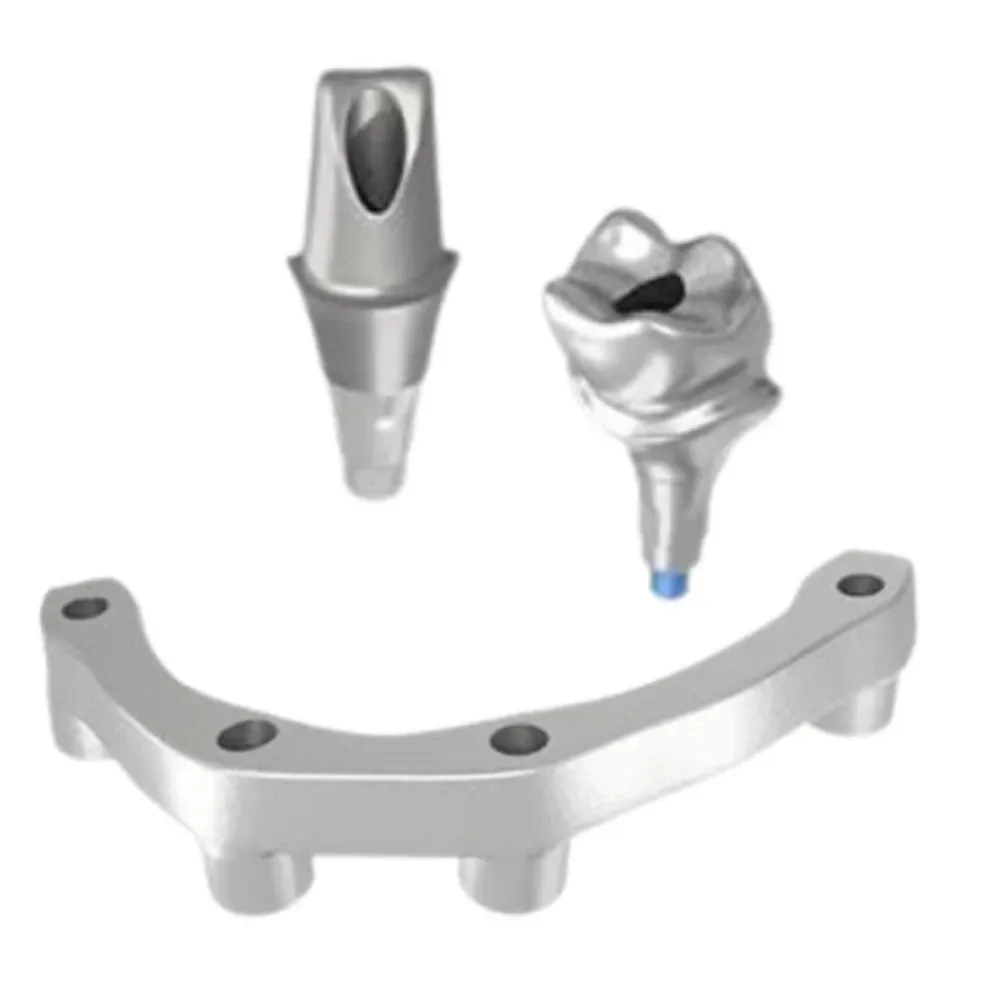
Screw-retained zirconia crown on a titanium base, access channel open
Screw-Retained Crowns You are here
Custom implant abutment supporting a cement-retained crown
Custom Abutments
Screw-retained full-arch hybrid prosthesis on multiple implants
Full Arch Hybrids (All-on-X)
Retention Screwed to the implant Cement-retained crown on abutment Screw-retained full arch
Retrievable? Yes — cleanly Not without destroying it Yes — by the clinician
Best for No cement risk, retrievability Unfavorable access, emergence control Edentulous arch on 4+ implants

Whether a screw-retained design is viable depends on the implant angulation and the system's angulated-channel capability. Confirm the exact system and platform with the lab before fabrication.

Design
Screwed to the implant — no cement
Materials
Zirconia on a Ti-base, or PFM
Key advantage
Retrievable, cement-free
Turnaround
Quoted per case at intake
Screw-retained zirconia crown on a titanium base, access channel visible

Overview

Retrievable, and No Cement to Leave Behind

Two problems disappear the moment a crown is screwed rather than cemented. You can take it off without destroying it, and there is no cement to be squeezed subgingivally where you will never fully remove it.

The restoration threads directly to the implant or a multi-unit abutment, torqued down, and the access channel sealed chairside — no abutment-plus-cement stack in between.

  • No cement: Residual subgingival cement is a recognized cause of peri-implant problems; a screw-retained crown removes that risk entirely.

  • Retrievable: Comes off intact for a screw check or a component change, where a cemented crown usually has to be destroyed.
Learn more
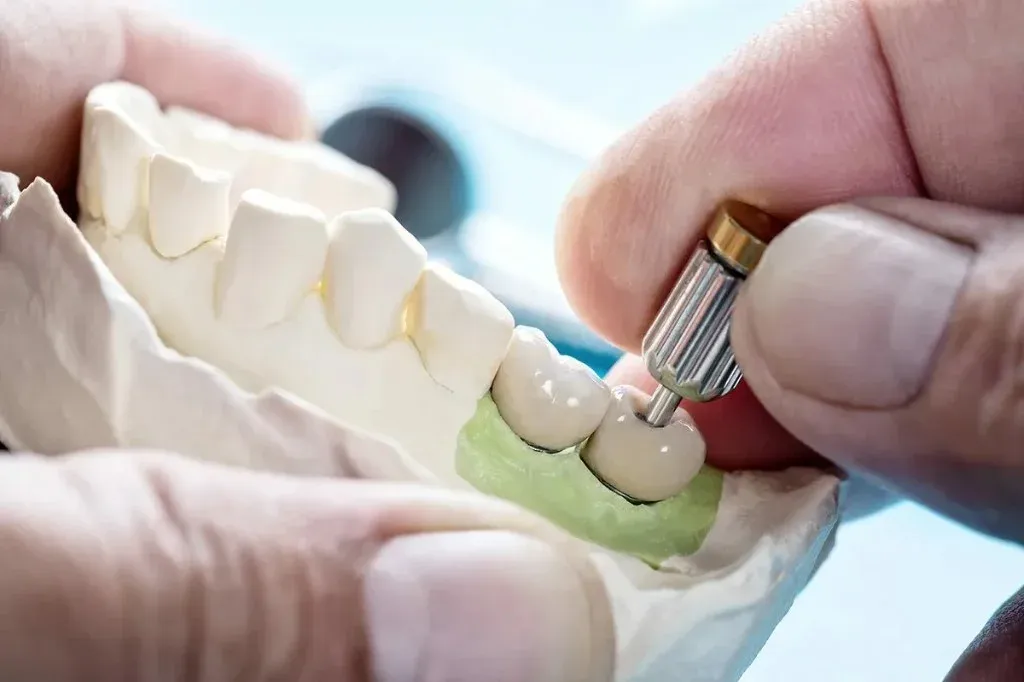
A technician checking a screw-retained crown on the implant analog

At the Bench

Access Designed, Fit Verified on the Analog

The crown is designed to the confirmed implant components, with the access channel routed as favorably as the implant position allows, then checked on the analog for fit and rotation before it ships.

  • Access channel: Routed away from esthetic and functional surfaces where possible.

  • Angulated channels: Used where the implant system supports them, to redirect access off an esthetic or working surface.

  • Fit and rotation: Verified on the analog before the crown goes anywhere near a box.

Learn more

The deciding factor

The whole decision turns on where screw access exits. Land it on a lingual surface or a fossa and you have a clean, retrievable restoration with no cement risk; land it on an incisal edge or a working cusp and you have a compromise. Angulated screw channels rescue many borderline cases — past that limit the angulation itself is the problem, which is why the position should be planned restoratively before the implant goes in.

Case Selection

When a Screw-Retained Crown Is the Right Call

Indicated for

  • Implant restorations where retrievability matters — the crown comes off without destroying it
  • Deep subgingival margins where residual cement would be impossible to remove reliably
  • Implants angled favorably enough that screw access lands somewhere acceptable
  • Cases with limited restorative space, where a cement layer and abutment stack do not fit
  • Restorations you may need to access later — for a screw check, or a component change

Consider an alternative when

  • Screw access would exit through an incisal edge or a functional cusp tip — a custom abutment and cement-retained crown may serve better
  • The implant angulation is unfavorable and an angulated screw channel cannot rescue it
  • The esthetic demand makes the access channel unacceptable even when filled
  • The case is a full arch — a hybrid prosthesis is the appropriate design

Specifications

Screw-Retained Crown Specifications

Design, materials, and record data for planning the implant restoration.

Typical parameters for the screw-retained implant crowns we make.
Design The crown is screwed directly to the implant or a multi-unit abutment — no cement in the restoration at all
Materials Monolithic or layered zirconia bonded to a titanium base, or PFM on a screw-retained framework
The core advantage Retrievability plus zero cement. Residual subgingival cement is a known cause of peri-implant problems; a screw-retained crown removes that risk entirely
The core constraint Screw access must exit somewhere acceptable — an access channel through an incisal edge or a working cusp is the reason to reconsider
Angulated screw channels Where the system allows, an angulated channel can redirect access away from an esthetic or functional surface
Implant interface System- and platform-specific — the exact system must be confirmed with the case
Restorative space Generally more forgiving than a cement-retained stack, since there is no abutment plus cement layer
Access channel Sealed chairside after torquing; the channel is designed and finished so it can be closed cleanly
Records needed Scan body capture or implant-level impression, opposing arch, bite, shade, and the exact implant system and platform
Turnaround Quoted per case at intake

Whether a screw-retained design is viable depends on the implant angulation and the system's angulated-channel capability. Confirm the exact system and platform with the lab before fabrication.

Case Submission

Sending a Screw-Retained Crown Case

We accept scan body captures from all major intraoral systems, including iTero, 3Shape, and Medit — with the implant system details.

Include with the case:

  • Scan body capture or implant-level impression
  • Scan of both arches, and a bite registration
  • Shade photos — a stump shade is rarely relevant, but adjacent-tooth photos help
  • The exact implant system and platform
  • Whether you are restoring at implant level or on a multi-unit abutment

If the angulation means access will land somewhere you will not accept, we will tell you before making the crown. New to the lab? Open an account and we will walk you through the first case.

Start a case

Send one case. Keep the scanner.

Open a partner account and your first case moves with a shade record and our remake guarantee — if a unit does not seat, we redo it at no charge.

  • Free 3Shape TRIOS 6 scanner for active partners
  • Under-2% remake rate — remakes at no charge
  • One named technician you reach directly — no call center

Prefer to talk? +1 747-268-0808

No call center — you hear back from the lab, not a bot.

Screw-Retained FAQ

Screw-Retained Crowns — Questions Dentists Ask

Two reasons dominate. Retrievability — a screw-retained crown comes off intact for a screw check or a component change, where a cemented crown usually has to be destroyed. And cement: residual subgingival cement is a recognized cause of peri-implant inflammation, and a screw-retained restoration removes that risk completely. The deciding constraint is where screw access exits — if it lands on an incisal edge or a functional cusp, a custom abutment with a cement-retained crown may be the better compromise.

Where the implant system supports it, an angulated screw channel can redirect access away from an esthetic or functional surface, and that rescues many cases that would otherwise have to go cement-retained. Beyond that limit, the honest answer is that the angulation is the problem — which is exactly why restoratively driven planning before placement matters so much. Send the case and we will tell you what the position will actually allow.

Ambiguous implant system or platform. Send a scan body capture or implant-level impression, both arches, bite, shade, and tell us whether you are restoring at implant level or on a multi-unit abutment. Everything is machined to specific components — guessing the connection stops the case.

How to send a file

When the angulation means access will land somewhere you will not accept. We confirm the implant system and components before fabrication, design the channel as favorably as the position allows, and check the crown on the analog for fit and rotation. Better to redesign than to discover it at try-in.

Complete implant records and a confirmed system keep the case moving. Material matters next: a monolithic zirconia crown moves faster than a layered anterior one that needs characterization.

Switching labs, de-risked

New to us? We confirm the implant system and components before fabrication and verify fit and rotation on the analog — and if the angulation means access will land somewhere you will not accept, we raise it before making the crown, not after try-in.

Partner Offer

A Free Intraoral Scanner for Partner Practices

Partner with Universal Dental Lab and we place a 3Shape TRIOS 6 Wireless in your operatory — free for the length of our partnership. Scan the prep, send it in seconds, and skip impressions entirely.