

Implant-Supported Dentures

What dentists send us when a lower denture will not stay put — overdentures on attachments or a bar, and fixed full-arch prostheses, engineered to seat passively.

When retention is the complaint, no impression technique or material fixes a ridge that has nothing left to hold onto — implants do. We build both routes: the removable overdenture and the fixed full arch.

Jahn De Khudikine, Founder · Universal Dental Lab
Jahn De Khudikine Founder · Universal Dental Lab

Why send it here

Locator misalignment shows up at insert, not in the lab. We verify the attachment path before processing.

A practice's schedule lives or dies by the lab — I've watched one late case push back a whole day of chair time.

So I still know the cases moving through this lab, and I answer for how each one is made. Send a case here and it doesn't drop into a queue — it lands with me and one technician who carries it start to finish.

Start a case
Implant-retained
Retention a resorbed ridge cannot give — as an overdenture or a fixed full arch Designed to the confirmed implant system and platform
Passive fit
Bar and framework verified to seat across every fixture before the case ships Restorative space checked against the design, not assumed
Your technician
One person holds your case Reach them directly — no call-center queue
Free scanner
3Shape TRIOS 6 for partners Go fully digital at no cost

Retention Comparison

Implant-Supported, Traditional, or Digital?

This decision is about retention, not manufacturing. Where the ridge cannot hold a denture, only implants change the outcome — and we make all three.

Implant overdenture seated on locator attachments
Implant-Supported Dentures You are here
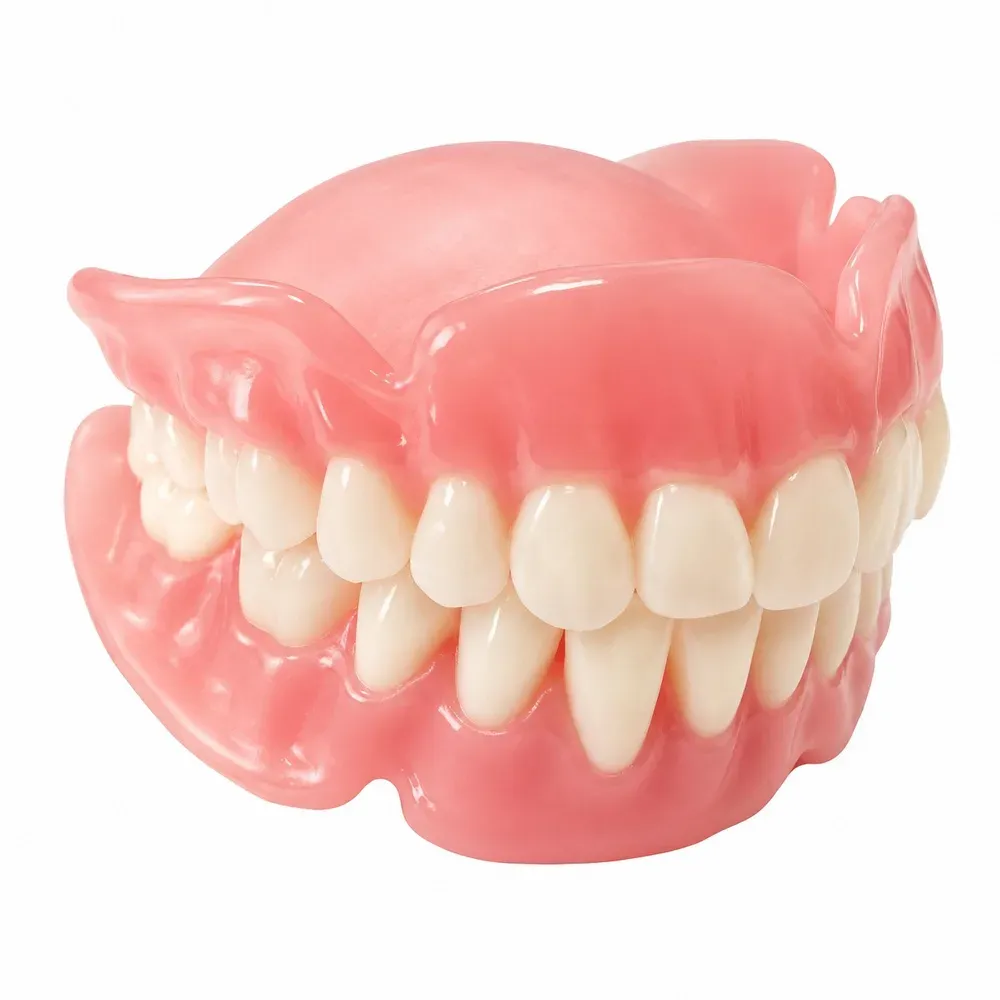
Conventional complete denture on the master cast
Traditional Dentures
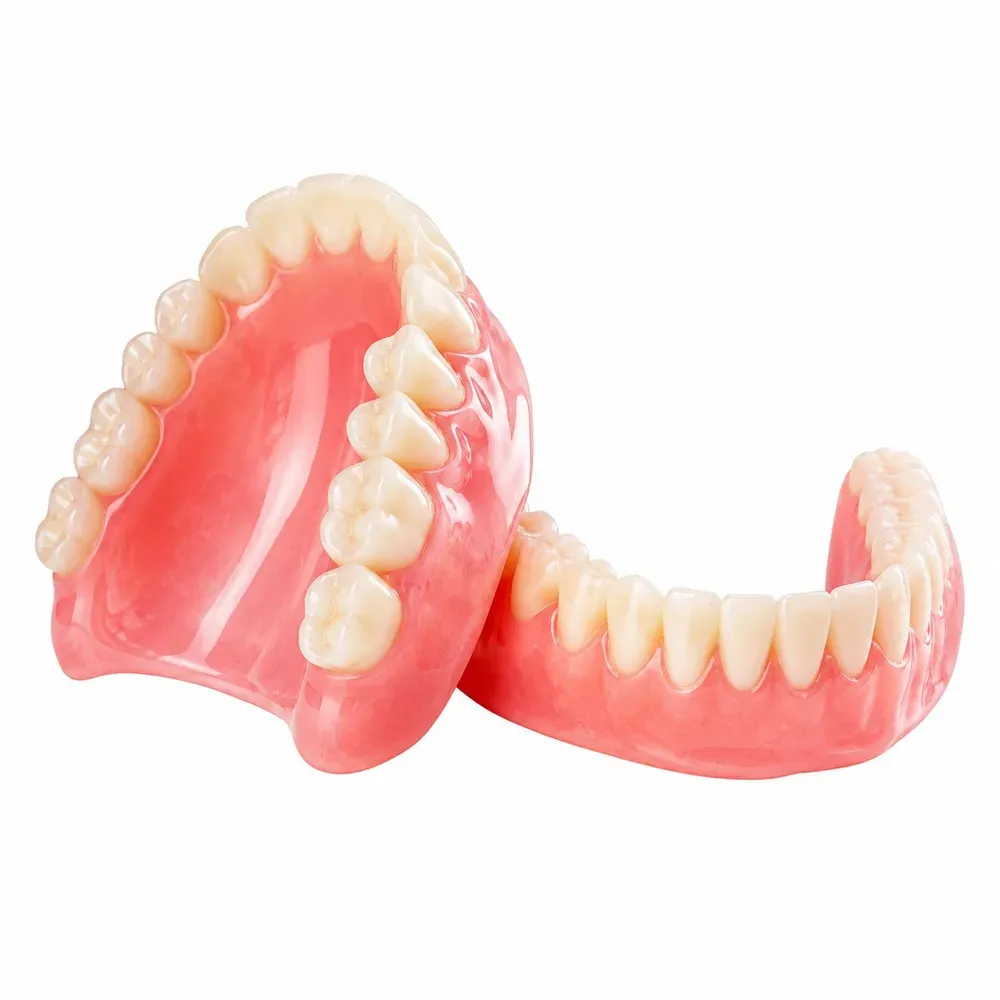
Milled digital denture with an archived design file
Digital Dentures
Retention Best choice implant-retained Good tissue-borne Good tissue-borne
Removable? Overdenture or fixed Removable Removable
Best for Resorbed ridges, failed conventional dentures Conventional complete denture treatment CAD/CAM workflow, archived design

Retention and design depend on implant number, position, and available restorative space. Confirm the implant system, attachment selection, and passive-fit verification with the lab before you finalize the prosthesis.

Design
Overdenture or fixed full-arch
Retention
Attachments or a bar
Support
Implant-retained
Turnaround
Quoted per case at intake
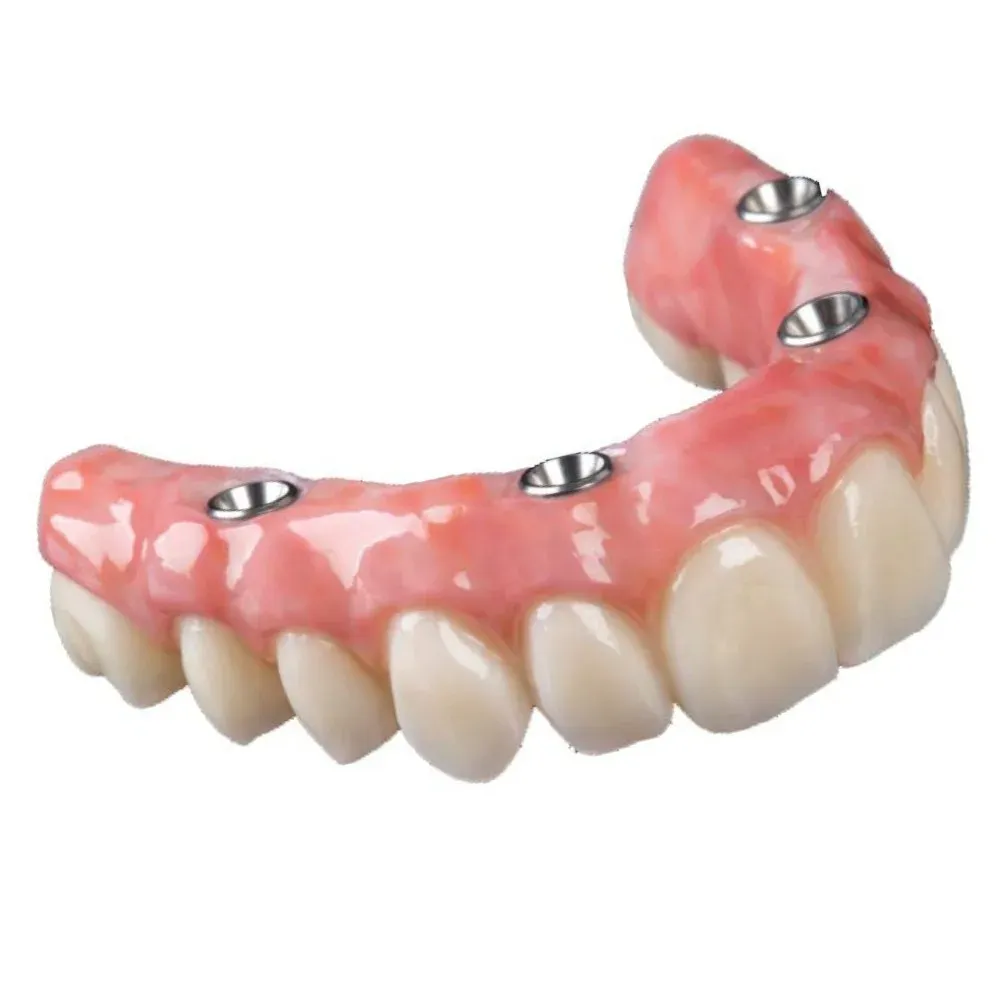
Implant overdenture and a fixed full-arch prosthesis side by side

Overview

When Retention Is the Problem, Implants Are the Answer

A resorbed mandibular ridge defeats even a beautifully made conventional denture. No impression technique, no material, and no workflow fixes a ridge that has nothing left to hold onto — implants do.

Implant-supported dentures come in two forms that solve different problems. Which one is possible depends on implant number, position, and the restorative space available.

  • Overdenture: Removable, retained by locator-style attachments or a bar; the patient takes it out to clean it, and it is the more economical route.

  • Fixed full arch: Stays in the mouth and is retrieved only by the clinician — a different prosthesis with different requirements.
Learn more
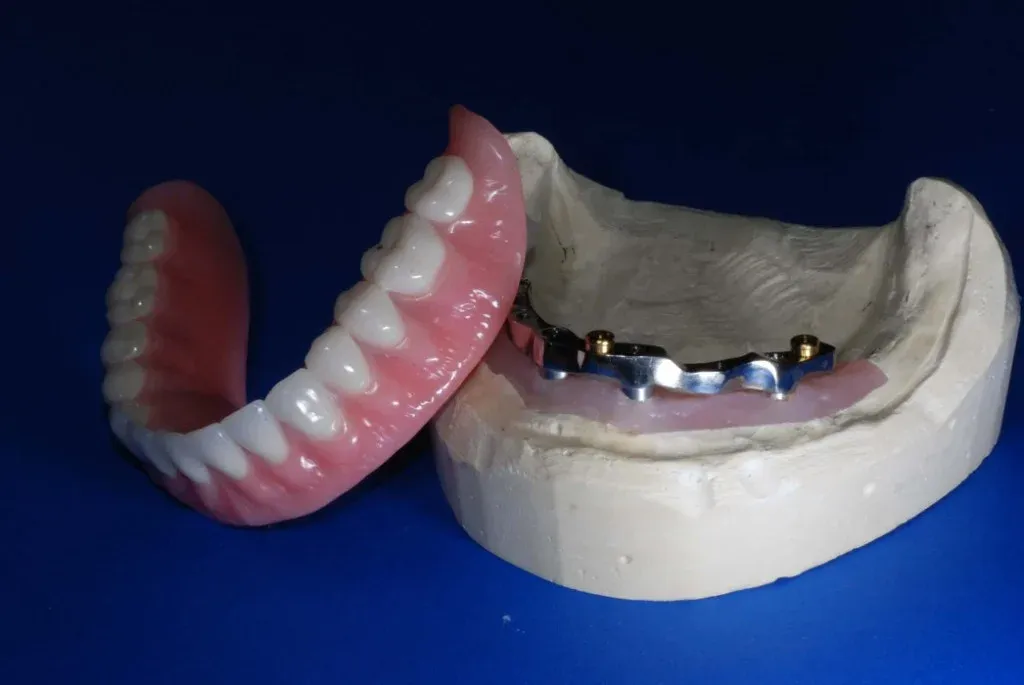
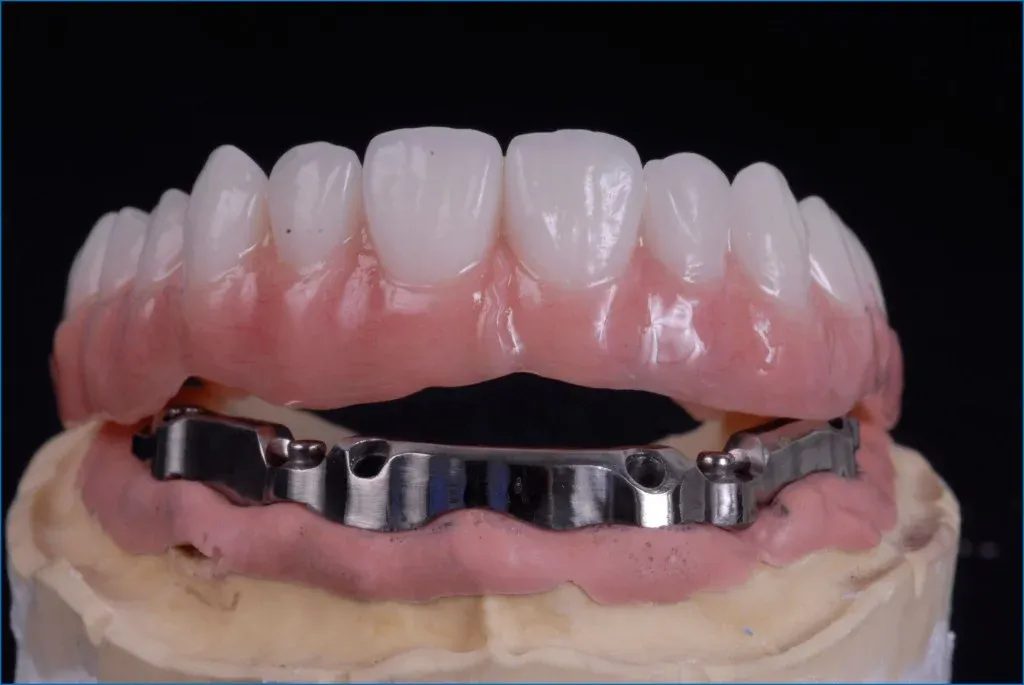
A milled titanium bar checked for passive seating across the fixtures

At the Bench

Designed to the System, Verified for Passive Fit

The prosthesis is designed to the confirmed implant components, with attachment positions or bar geometry set to the fixtures, then verified for passive seating before the case is finished. Restorative space is checked against the planned design, not assumed.

  • Designed to the system: Built to the confirmed implant system and platform — components are system-specific and cannot be approximated.

  • Passive fit: Verified across all fixtures — a bar or framework that does not seat passively transfers stress to them.

  • Restorative space: Checked before fabrication; a prosthesis squeezed into inadequate space is the one that fractures.

Learn more

Before you finalize

Attachments, bars, and prosthetic material all consume vertical height. Confirm the restorative space and the exact implant system and platform for every fixture before fabrication — every component is system-specific and cannot be approximated.

Case Selection

When an Implant-Supported Denture Is the Right Call

Indicated for

  • Resorbed mandibular ridges where a conventional lower denture will never stay seated
  • Patients who have failed with conventional dentures despite a well-made prosthesis
  • Cases where retention, stability, and chewing function are the primary complaint
  • Removable overdentures on locator-style attachments or a retentive bar
  • Fixed full-arch prostheses where implant number and position support them

Consider an alternative when

  • The patient is well served by a conventional denture and retention is not the problem
  • Implant placement is not viable and the plan must remain tissue-borne
  • The restorative space or implant positions will not support the planned attachment or bar
  • The case is an interim stage — an immediate or conventional denture bridges to the implant plan

Specifications

Implant-Supported Denture Specifications

Design, retention, and record data for planning the implant prosthesis.

Typical parameters for the implant overdentures and fixed prostheses we make.
Design types Removable overdenture retained by attachments or a bar, or a fixed full-arch prosthesis on implants — the two solve different patient expectations
Retention options Locator-style stud attachments, or a milled/cast retentive bar with clips; the choice affects retention, maintenance, and cost
Support Implant-retained — the fixtures carry retention, and depending on the design, some or all of the load, rather than the ridge alone
The critical requirement The exact implant system and platform for every fixture; components are system-specific and cannot be approximated
Restorative space Attachments, bars, and prosthetic material all consume vertical space — inadequate restorative space is a common cause of a compromised or fractured prosthesis
Bar-retained designs Milled titanium or cast bars, designed for passive fit across the fixtures and cleansable contours
Maintenance Attachment inserts and clips wear and are replaced periodically — a maintenance plan is part of the treatment, not a defect
Records needed Scan bodies or implant-level impressions, opposing arch, jaw relation records, shade, and the exact implant system and platform
Restoration types Implant overdentures and fixed full-arch implant prostheses
Turnaround Quoted per case at intake; staged, component-dependent case

Design depends entirely on the specific implant system, fixture positions, and available restorative space. Confirm implant components, attachment selection, and passive-fit verification with the lab before you finalize the prosthesis.

Case Submission

Sending an Implant-Supported Denture Case

We accept scan body captures from iTero, 3Shape, and Medit — with the implant system details, since every component is system-specific.

Include with the case:

  • Scan bodies or implant-level impressions for every fixture
  • Opposing arch record and jaw relation records
  • Shade and tooth mold selection
  • The exact implant system and platform for each implant
  • The plan: overdenture on attachments, bar-retained, or fixed full-arch

An ambiguous or missing implant detail is the one input that stops the case — confirm the system and platform for every fixture. New to the lab? Open an account and we will walk you through the first case.

Start a case

Send one case. Keep the scanner.

Open a partner account and your first case moves with a shade record and our remake guarantee — if a unit does not seat, we redo it at no charge.

  • Free 3Shape TRIOS 6 scanner for active partners
  • Under-2% remake rate — remakes at no charge
  • One named technician you reach directly — no call center

Prefer to talk? +1 747-268-0808

No call center — you hear back from the lab, not a bot.

Implant Denture FAQ

Implant-Supported Dentures — Questions Dentists Ask

An overdenture is removable — retained by locator-style attachments or a bar; the patient takes it out to clean; generally more economical. A fixed full-arch stays in the mouth and is retrieved only by the clinician. Retention, cleansability, cost, and expectation differ, and implant number and position must support whichever is planned. Settle this before surgery, not after.

The exact implant system and platform for every fixture. Also send scan bodies or implant-level impressions, opposing arch, jaw relation with VDO and centric, shade, and whether the plan is attachments, a bar, or a fixed prosthesis. An ambiguous implant detail stops the case.

Two things dominate: passive fit and restorative space. A bar that does not seat passively stresses the fixtures. Attachments, bars, and prosthetic material all consume vertical height — inadequate space is a leading cause of a fractured or over-thinned prosthesis, and we raise it before fabricating. Attachment inserts wearing over time is normal maintenance, not a failure.

Ideally yes. Implant number, position, angulation, and available restorative space determine which prosthesis is even possible. See full-arch case planning and overdenture bars for how we stage these, and involve us early when fixtures are not yet placed.

Full-arch case planning

When lower retention on a resorbed ridge is the complaint — implants (even two with locators) change the outcome in a way acrylic alone cannot. If that is the situation, start the implant conversation before another conventional remake.

Switching labs, de-risked

New to us? Send the scan bodies and the implant system details with your prosthetic plan — we design to the components, verify passive fit, and confirm the space works before we fabricate. One technician holds the case, and you can reach them directly.

Partner Offer

A Free Intraoral Scanner for Partner Practices

Partner with Universal Dental Lab and we place a 3Shape TRIOS 6 Wireless in your operatory — free for the length of our partnership. Scan the prep, send it in seconds, and skip impressions entirely.