
Smile Design Consultation

Dentists talk the esthetic case through with the lab first — material, shade and approach agreed before the prep, so the result is planned, not hoped for.

The hardest part of an anterior case is not making the restorations. It is agreeing, before the prep, on what the result should be — the shade, the shape, the material, and how far the case can realistically go.

Jahn De Khudikine, Founder · Universal Dental Lab
Jahn De Khudikine Founder · Universal Dental Lab

Why send it here

The patient signs off on pixels, not on regret. We align the mockup with you before prep day.

A practice's schedule lives or dies by the lab — I've watched one late case push back a whole day of chair time.

So I still know the cases moving through this lab, and I answer for how each one is made. Send a case here and it doesn't drop into a queue — it lands with me and one technician who carries it start to finish.

Start a case
Decisions before the drill
Material, shade and approach settled while still reversible Not improvised at the prep or discovered at try-in
An honest esthetic read
What the anterior case will and will not support The promise to the patient stays within reach
Your technician
One planner holds your case Reach them directly — no call-center queue
Free scanner
3Shape TRIOS 6 for partners Go fully digital at no cost
Universal Dental Lab Smile design consultation sheet

What to send

  • Retracted + natural-smile photographs
  • Intraoral scan, both arches (STL)
  • Shade reference (and stump shade)
  • The patient's goals for the case
  • Existing restorations or prior work
  • Any relevant occlusal notes

The clearer the goal, the more useful the consultation — even a rough note on the result you have in mind gives it something concrete to work from.

How We Work With You

A Smile Design Consultation Before You Commit

A smile design consultation is the planning conversation with the lab's esthetic team — the front end of anterior esthetics, shade planning and veneer planning. You bring the case and the patient's goals; we bring an honest read on feasibility, the material options and the shade strategy, so the approach is decided before a tooth is touched or a design is committed.

The conversation
A smile design consultation is a conversation with the lab's esthetic team. You bring the case and the patient's goals; we bring an honest read on feasibility, the material options and the shade strategy — so the approach is decided before a tooth is touched or a design is committed.
What we talk through
The patient's goals against what the anterior situation supports, material options and their trade-offs, a shade strategy that accounts for the underlying tooth and any existing restorations, and how much preparation each approach requires. Where an expectation outruns what the case can deliver, we say so early.
From conversation to case
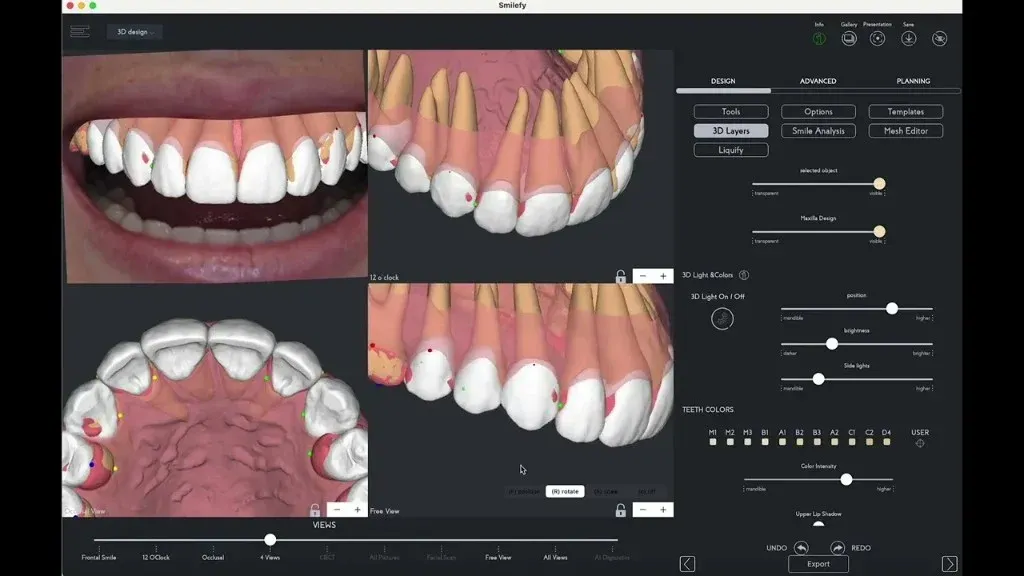
The agreed direction does not stay a conversation. It flows into the digital smile design and the wax-up, so the plan you and the patient accepted is the one that gets built.
Ceramist reviewing anterior patient photographs and a shade reference against the intraoral scan on screen

The Consultation

Where a Consultation Changes the Plan

Material choice is the usual pivot — a minimal-prep veneer versus full coverage, or lithium disilicate versus layered ceramic for a demanding shade. Discolored preparations and single-central matches are the two situations where a shade strategy set in advance saves the most grief at try-in.

  • Material options: Minimal-prep veneer against full coverage, monolithic against layered ceramic — chosen for the shade the case demands.

  • Shade strategy: Set against the underlying tooth and any existing restorations, so a discolored prep or single-central match is planned, not discovered.
Learn more
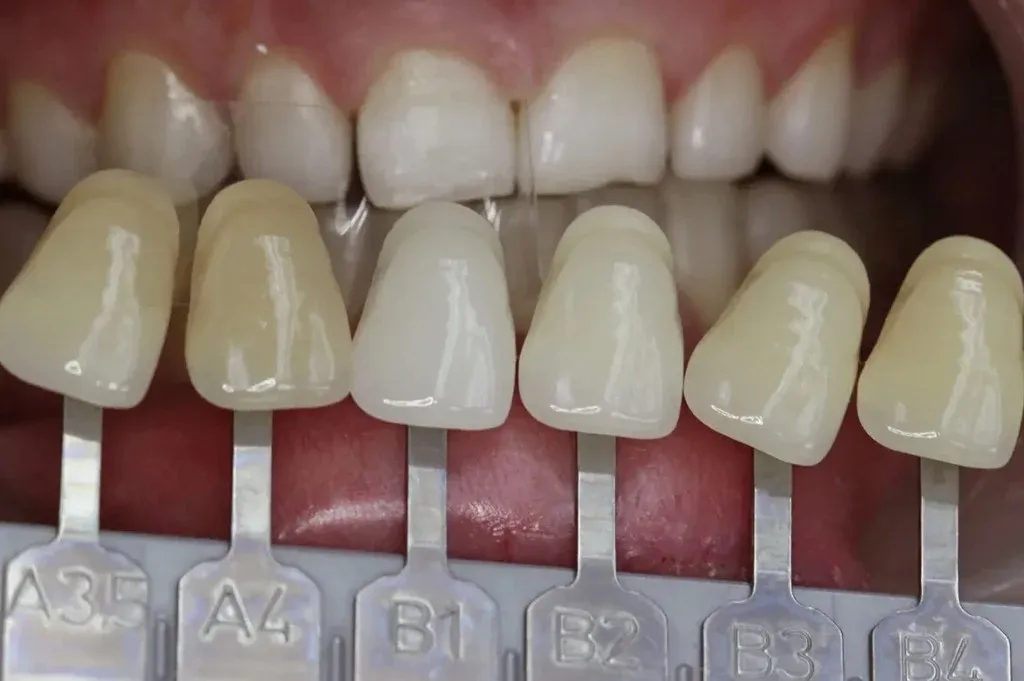
Single central incisor shade being matched at the bench against the adjacent natural tooth

Shade & Material

The Two Decisions Most Cases Turn On

Shade and material carry most anterior cases. A consultation settles both against the real situation — the underlying tooth color, the opposing dentition, the light the patient lives in — before a prep locks the options in.

For a single-central match or a discolored preparation, agreeing the strategy in advance is the difference between one appointment and a remake.

  • Underlying tooth color: The stump shade read before material is chosen — the case a discolored preparation actually presents.

  • The single-central match: The hardest esthetic call, planned in advance so the ceramist layers toward a target everyone agreed on.

Learn more

From conversation to case

The agreed direction does not stay a conversation. It flows into the digital smile design and the wax-up, so the plan you and the patient accepted is the one that gets built — and the shade strategy is set before the ceramist begins.

The Process

How a Consultation Runs

Five steps from the case landing on the bench to an agreed esthetic direction.

  1. You bring the case and the goal

    Practice

    Photographs, an intraoral scan, a shade reference, and what the patient is asking for. Even a rough note on the result you have in mind gives the consultation something concrete to work from.

  2. We review esthetic feasibility

    Lab

    Our ceramist looks at the anterior situation — tooth position, proportion, shade, existing restorations and the patient photos — to see what the case will and will not support.

  3. We consult

    Lab

    You get options and trade-offs: material choices, a shade strategy, how much preparation each approach needs, and where the esthetic ambition meets a clinical limit. Recommendations, not a lecture.

  4. You agree the approach

    Practice

    Together we settle on material, shade direction and the restorative approach before any tooth is prepared or any design is committed.

  5. Into design and production

    Lab

    The agreed direction feeds the digital smile design, the wax-up and the final restorations — so the case is built on a plan you and the patient already accepted.

What consulting first actually buys you

  • Decisions before the drill

    Material, shade and approach are settled while they are still reversible — not improvised at the prep or discovered at try-in.

  • Expectations you can meet

    An honest read on what the case supports keeps the promise to the patient realistic and the final result within reach.

  • One team, consult to ceramic

    The ceramist who advises on the case is part of the same lab that layers the final restorations — the plan and the hands agree.

Start a case

Send one case. Keep the scanner.

Open a partner account and your first case moves with a shade record and our remake guarantee — if a unit does not seat, we redo it at no charge.

  • Free 3Shape TRIOS 6 scanner for active partners
  • Under-2% remake rate — remakes at no charge
  • One named technician you reach directly — no call center

Prefer to talk? +1 747-268-0808

No call center — you hear back from the lab, not a bot.

Consultation FAQ

Smile Design Consultation — Questions Dentists Ask

Consult when material choice, prep strategy, or patient expectations are still open. DSD is the design deliverable once you know you want a facially driven plan and approvable proof. A short consultation often saves a revision round on the design because shade and prep depth were settled first.

Digital Smile Design (DSD)

Material and minimum reduction, whether the case is additive or requires ortho or gingival adjustment, shade strategy, and whether a mockup is part of consent. Those choices belong in conversation — not discovered when the scan arrives post-prep. We align them to what the patient actually agreed to show in photos.

Yes, when that is the question. We can talk through veneer versus crown coverage, stump management for dark teeth, and how provisionals will mirror the approved design. It is not clinical diagnosis — it is lab-side feasibility so the case you start can be finished without reversing material or contour midstream.

How to send a file

The consultation itself is the planning conversation and agreed direction; formal CAD proofs come from DSD, anterior case design, or wax-up services once you proceed. You leave knowing the next record to collect and which design product fits the case — not a vague “send it in.”

It should, when esthetics must agree with vertical or implant staging. We tie the smile goal to complex case review or implant planning so anterior length is not planned in isolation from posterior support or future fixtures. Multidisciplinary cases benefit from one esthetic brief everyone works from.

Complex case review

Partner Offer

A Free Intraoral Scanner for Partner Practices

Partner with Universal Dental Lab and we place a 3Shape TRIOS 6 Wireless in your operatory — free for the length of our partnership. Scan the prep, send it in seconds, and skip impressions entirely.