
CAD/CAM Design Services

We design the restoration from the scan a dentist sends — margins, contacts and occlusion resolved in CAD before anything is milled or printed.

CAD/CAM design services turn an intraoral scan into a manufacturable restoration. It is the step where the decisions that determine fit are made — on screen, where they are still cheap to change.

Jahn De Khudikine, Founder · Universal Dental Lab
Jahn De Khudikine Founder · Universal Dental Lab

Why send it here

A design file with the wrong emergence profile mills perfectly wrong. We check anatomy before you approve.

A practice's schedule lives or dies by the lab — I've watched one late case push back a whole day of chair time.

So I still know the cases moving through this lab, and I answer for how each one is made. Send a case here and it doesn't drop into a queue — it lands with me and one technician who carries it start to finish.

Start a case
From your scan
STL in — a design ready for milling or printing out iTero · 3Shape · Medit
Proof before production
The design signed off before anything is milled Margins, contacts and occlusion resolved in CAD
Your technician
One person holds your case Reach them directly — no call-center queue
Free scanner
3Shape TRIOS 6 for partners Go fully digital at no cost

Digital Workflow

From Scan to Approved Design

A predictable four-step path, with a review point before anything is produced.

  1. Scan In

    Upload an STL from your intraoral scanner with the prescription. We accept files from iTero, 3Shape and Medit, or a digitized traditional impression.

  2. Design in CAD

    Technicians design the restoration against the prep and the opposing dentition, resolving margins, contacts, occlusion and emergence profile.

  3. Review & Approve

    For esthetic or complex work we send a design proof. We flag anything unclear in the scan and confirm with you rather than guessing.

  4. Produce & Inspect

    On approval the design goes to milling or printing, is finished, checked against the model, and dispatched on the quoted turnaround.

Input
STL from iTero, 3Shape, Medit
Design
Margins, contacts, occlusion in CAD
Proof
Sign-off before production
Turnaround
Quoted per case at intake
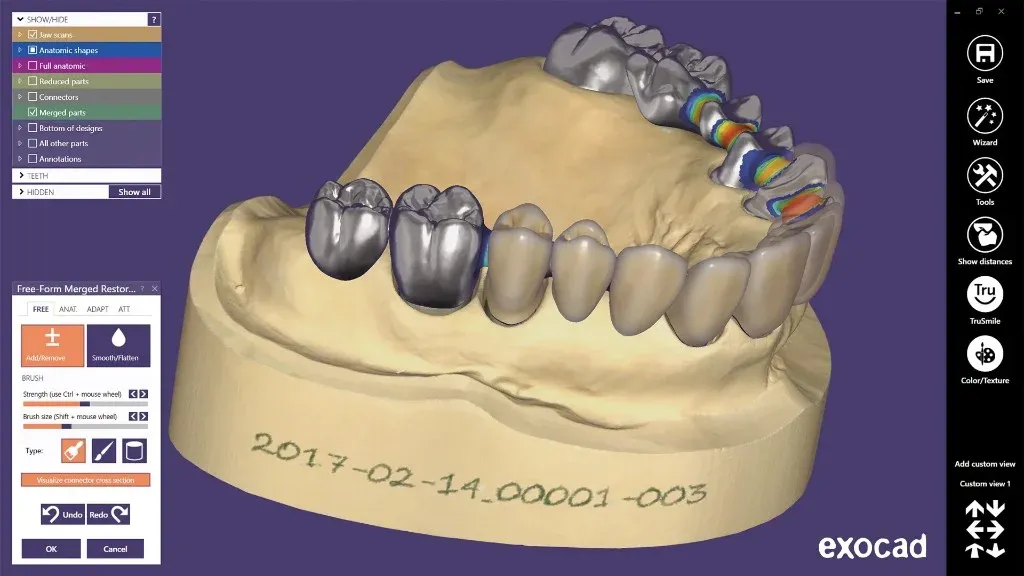
CAD workstation with a restoration open on screen, intraoral scan loaded alongside

Overview

CAD/CAM Design Services for Clinical Workflows

CAD/CAM design services turn an intraoral scan into a manufacturable restoration. It is the step where the decisions that determine fit are made — on screen, where they are still cheap to change.

Whether you mill in-house and want the design handled, or you send the case to us start to finish, the design stage is the same: technicians build the restoration against the prep and the opposing dentition, resolving margin, contact, occlusal clearance and emergence profile before production begins.

  • Fits every restorative workflow: Restorative, implant, removable and surgical cases all start from the same digital record.

  • Case selection still matters: A long-span bridge, a loaded second molar and an anterior veneer are not the same design problem.
Learn more
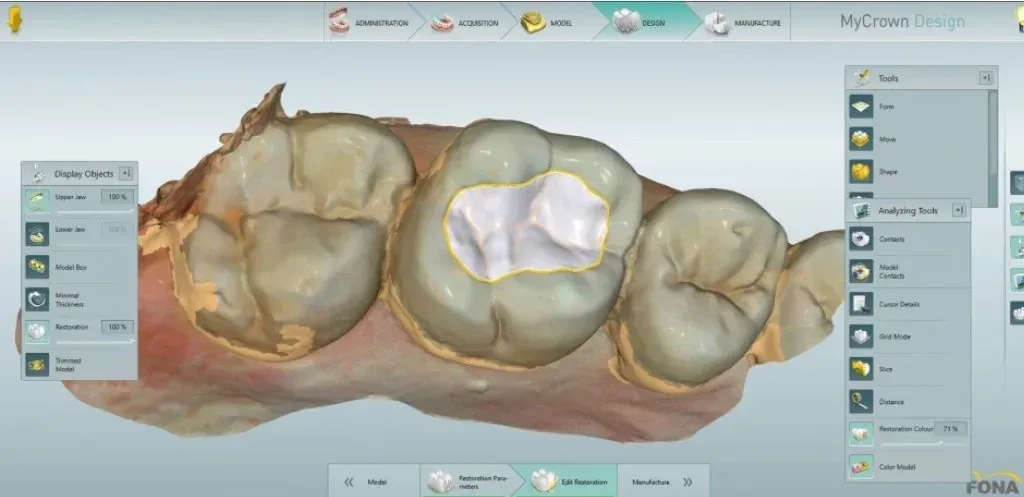
Close-up of a traced margin line on a prepped tooth in the design software

On Screen First

Fit Is Decided in the Design, Not at the Chair

Every restoration is built against your scan and the opposing model. Margins are traced under magnification, contacts and occlusion are set to the articulated bite, and the emergence profile is shaped to the tissue — all before a block is milled.

  • Margins traced and verified in CAD: Under magnification, against the scan of the prep — not chased at seating.

  • Contacts and occlusion to the model: Set to the articulated bite before anything is milled or printed.

Learn more
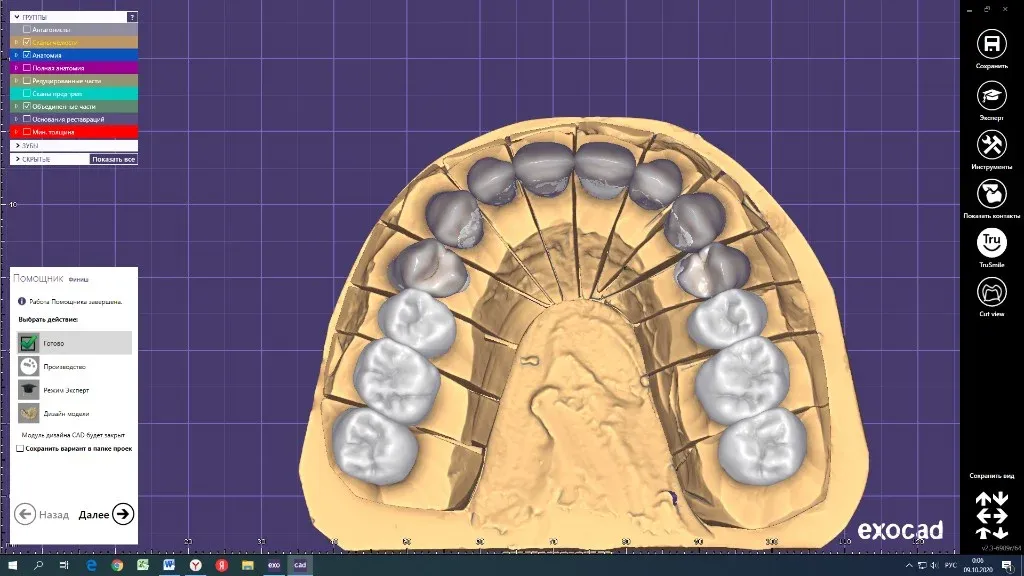
Design-proof render of a restoration sent to a dentist for approval on screen

Design Review

A Proof You Can Sign Off On

On esthetic and complex cases we send a design proof before production — the proposed contours, contacts and occlusion, ready for your approval. Nothing is milled or printed until you are satisfied with the plan.

If the scan cannot support the design — a margin that was not captured, a bite that does not read — you hear about it at this stage, not after the case ships.

  • Approve before production: The proposed contours, contacts and occlusion go to you for sign-off first.

  • Scan problems flagged early: An uncaptured margin or an unreadable bite is raised at design, not after shipping.

Learn more

Case Types

What We Design

From a single crown to a full-arch framework, the design step is where the case is made or lost.

Single Units & Bridges

Anatomic crown and bridge design with margins, contacts and occlusion resolved in CAD before a block is touched.

Implant Restorations

Screw-retained crowns, custom abutments and hybrid designs built to the implant platform and the emergence you want.

Removable Frameworks

RPD framework design — rests, clasps, connectors and relief planned digitally for a passive, repeatable fit.

Full-Arch & Full-Mouth

Multi-unit and full-arch design where consistent contours and occlusion across the case matter most.

Surgical & Appliance Design

Guide, splint and appliance design produced from the same digital record as the restoration.

Design-Only Outsourcing

Send scans and let our technicians design; you mill or print in-house, or we produce the finished unit.

Method Selection

When Design Outsourcing Is the Right Fit

  • Single-unit crowns and multi-unit bridges
  • Screw-retained implant crowns, custom abutments and hybrids
  • RPD frameworks — rests, clasps, connectors and relief
  • Full-arch and full-mouth restorative design
  • Surgical guides, splints and appliances
  • Design-only cases you mill or print in-house

Mill or print in-house and let us handle the design, or send the case start to finish — the design stage is the same either way.

Advantages

Why Design in CAD

  • Decisions Made in Software

    Margin, contact, occlusal clearance and emergence are set and checked on screen — not discovered at the seating appointment.

  • A Proof Before Production

    On esthetic and complex cases we can send a design proof for your sign-off, so nothing is milled until you approve it.

  • Repeatable Across the Case

    The design lives in a file. A remake or an added unit matches what came before, with no re-carving at the bench.

  • Less Chair Time

    Accurate contacts and occlusion out of the box mean fewer adjustments and shorter seat appointments.

Where the design earns its place

The decisions that determine fit — margin, contact, occlusal clearance and emergence — are set on screen, where they are still cheap to change. Get them right in the design and the restoration seats predictably, with little adjustment at the chair.

Materials & Quality

Materials, Design, and Quality Control

Material Selection and Case-Specific Recommendations

The design and the material are chosen together. Technicians advise on zirconia, lithium disilicate, metal alloys, resins or printed materials based on the load, the esthetic demand and your preference — because a design optimized for one material is not automatically right for another.

Read the full quality process Show less

Digital Design and Quality Control

Scan review, margin and contact checks, and occlusion review are built into every case. When records are ambiguous, we ask before production rather than proceed on an assumption — the single most reliable way to keep remakes down.

Fit, Esthetics, and Functional Reliability

Strength, contours, contacts, emergence profile, shade and occlusion are balanced to the clinical situation and to chairside efficiency, so what you receive seats predictably and needs little adjustment.

Case Submission

What to Send With a CAD/CAM Design Case

A complete record is the difference between a case that flows and a case that stalls on questions.

Required records:

  • STL of the prepped and opposing arches (or an impression to digitize)
  • Bite registration
  • RX with restoration type and material
  • Shade instructions
  • Implant system and platform for implant cases

Helpful extras: stump shade for discolored preps, smile and facial photographs, CBCT/DICOM for implant work, and design notes. The most common causes of a stalled case are unclear margins, a missing bite and incomplete implant information — flag anything unusual and we will confirm before we design. New to the lab? Open an account to get started.

Why Universal Dental Lab

Why Clinics Choose Us for Design

  • Design Approval Before Manufacture

    You see margin, contact, and occlusion decisions in the CAD file and approve them before anything moves to mill or print.

  • Checks Baked Into Every Export

    Scan validation, margin review, and occlusal verification are part of the design pass — not an optional add-on when something fails at seat.

  • One Lab From STL to Seat

    The team that designs the restoration can mill, print, or cast it here, so the approved file is what the bench actually builds.

Start a case

Send one case. Keep the scanner.

Open a partner account and your first case moves with a shade record and our remake guarantee — if a unit does not seat, we redo it at no charge.

  • Free 3Shape TRIOS 6 scanner for active partners
  • Under-2% remake rate — remakes at no charge
  • One named technician you reach directly — no call center

Prefer to talk? +1 747-268-0808

No call center — you hear back from the lab, not a bot.

CAD/CAM Design FAQ

CAD/CAM Design Services — Questions Dentists Ask

Margins, contacts, occlusion, emergence, and connector geometry for the restoration you prescribed — crown, bridge, bar, abutment, or provisional. Implant cases include the abutment or framework interface to the scan body capture. The design file is what production runs from, so anything ambiguous in the scan gets resolved here rather than on the model.

Yes on esthetic anterior work, complex multi-unit cases, and anywhere you want to sign off on contour before irreversible steps. We send a design proof when the RX asks for it or when the case warrants it — insufficient reduction, a tight occlusal table, or an unclear margin are the usual triggers. Simple posterior singles often move straight through once the scan checks clean.

Unreadable margins, a missing or distorted bite, double scans of the same prep, and implant captures without a identifiable scan body or system detail. We can optimize mesh and orientation, but we cannot invent data the scanner never recorded — those cases need a re-scan or a clarified record before design starts.

How to send a file

Send the RX with whether you need the STL design file back, lab fabrication from the design, or both. Some practices design in-office and only need a second check; others want the full path from scan to finished restoration. Either way, the same margin and occlusion checks apply before anything ships.

Whenever screw access, angulation, or prosthetic space is still an open question — designing a crown on a poorly placed implant fixes little. Restoratively driven planning settles positions first; custom abutment design and the definitive CAD then follow the approved plan. For All-on-X, start with full-arch planning so reduction and hybrid space are already accounted for.

Implant case planning

Partner Offer

A Free Intraoral Scanner for Partner Practices

Partner with Universal Dental Lab and we place a 3Shape TRIOS 6 Wireless in your operatory — free for the length of our partnership. Scan the prep, send it in seconds, and skip impressions entirely.