

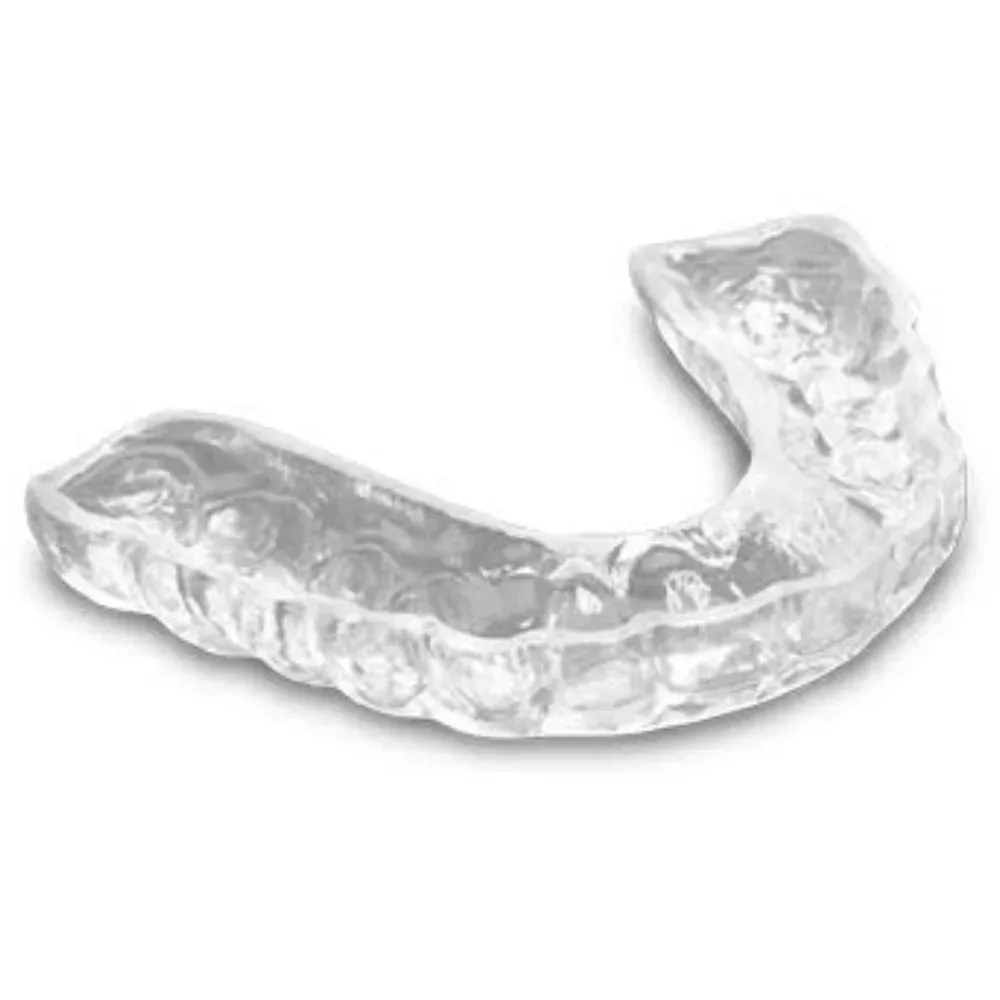
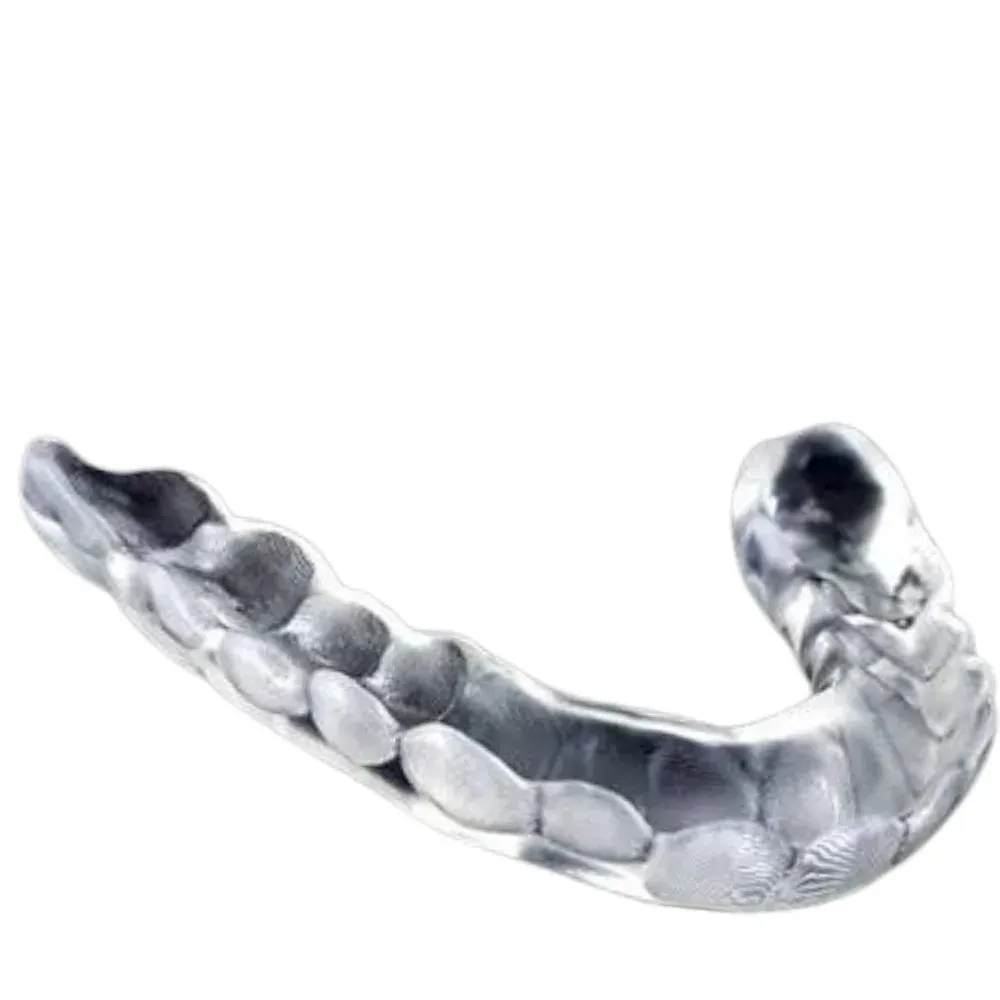
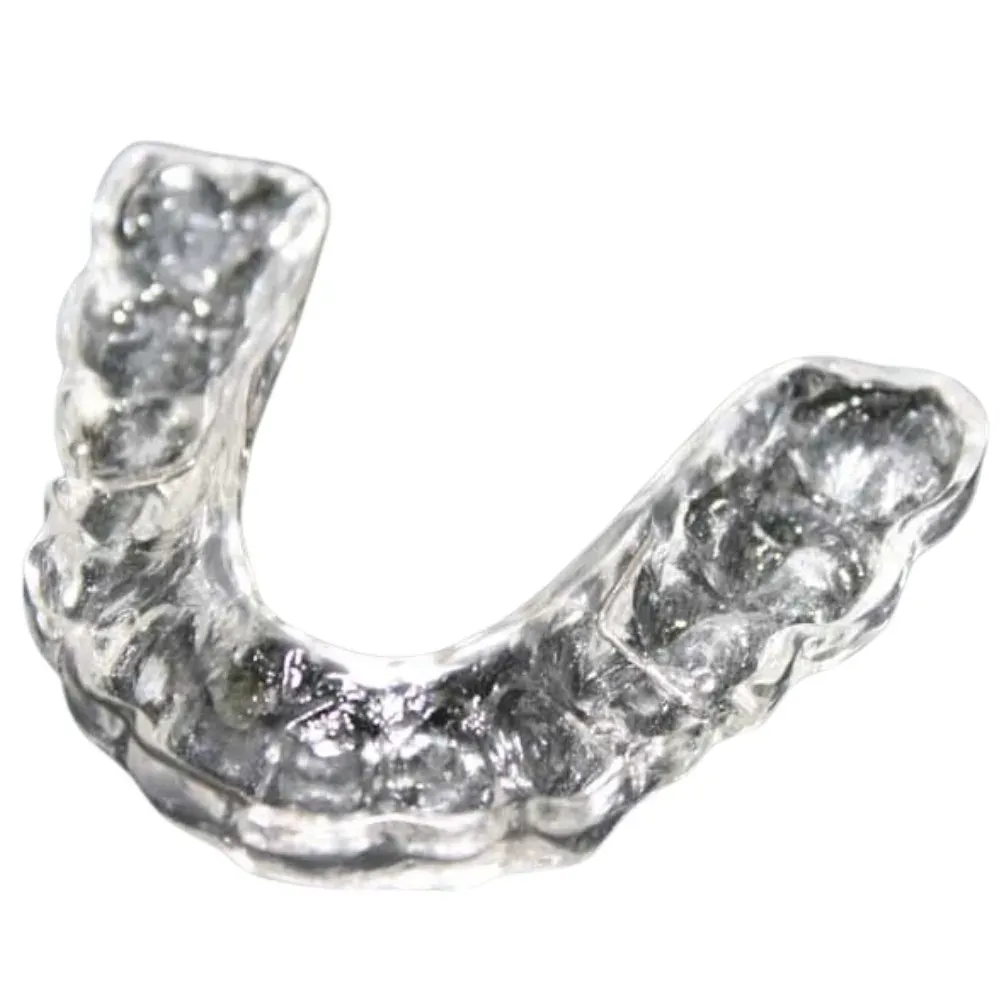
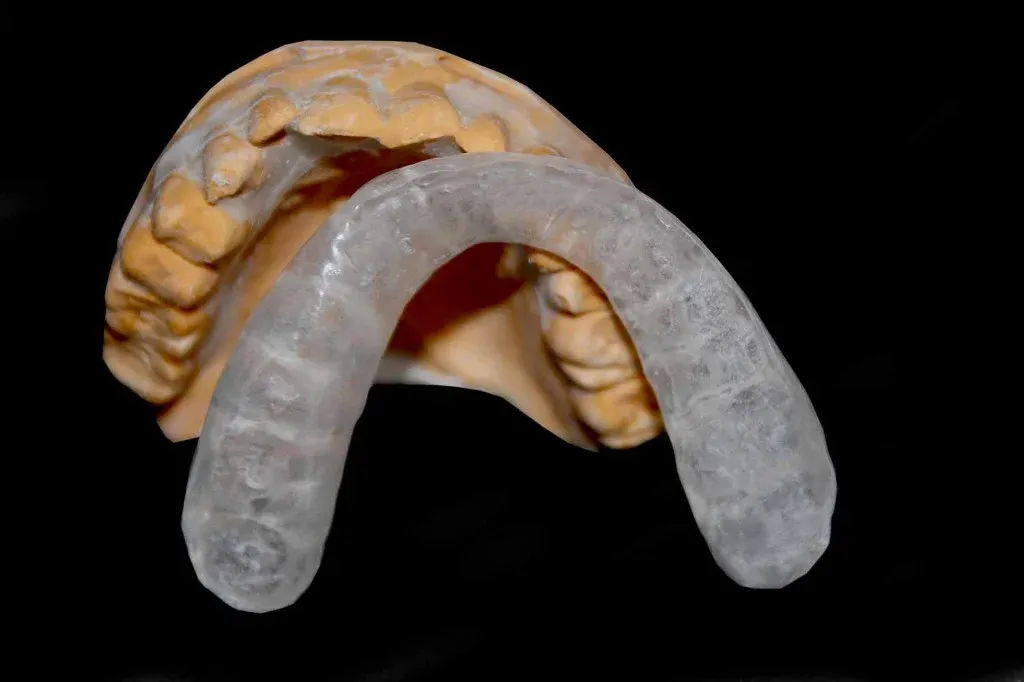
Comfort H/S Nightguards

A dual laminate: soft against the teeth so it grips the undercuts, hard outside so the occlusion you refine stays refined.

H/S is hard/soft — one thermoformed sheet of two bonded layers. The soft liner grips; the rigid shell holds the occlusal scheme you grind into it. It is not a soft guard, and that distinction decides the case.

Jahn De Khudikine, Founder · Universal Dental Lab
Jahn De Khudikine Founder · Universal Dental Lab

Why send it here

A dual laminate that peels at the soft layer was bonded wrong. We form and finish both layers as one appliance.

A practice's schedule lives or dies by the lab — I've watched one late case push back a whole day of chair time.

So I still know the cases moving through this lab, and I answer for how each one is made. Send a case here and it doesn't drop into a queue — it lands with me and one technician who carries it start to finish.

Start a case
Hard / soft laminate
Soft inner liner grips the undercuts, rigid outer shell carries the occlusion Retention without squeezing the guard onto the arch
Adjusted on the model
Occlusion refined on the hard outer shell against the opposing arch, then polished The chairside adjustment you grind in stays put
Your technician
One person holds your case Reach them directly — no call-center queue
Free scanner
3Shape TRIOS 6 for partners Go fully digital at no cost

Against the Alternatives

Laminate, Hard Processed, or Processed Splint?

Only one of these three cannot be repaired once it gives out. It is this one. That is the trade for the soft liner — we make all three, so pick the one the case needs.

Dual laminate guard on the master model, soft liner inside the rigid shell
Comfort H/S Nightguards You are here
Hard processed nightguard, rigid the whole way through
Talon Nightguard
Processed clear splint on the model, firm once seated
CLEARsplint
How it is built Dual laminate thermoformed over the model: soft inside, hard outside Hard processed guard, rigid the whole way through Processed clear splint: monomer-free, thermoactive, firm once seated
How it gives out The bonded layers separate at the margin, and heat brings that day forward Nothing to delaminate. It wears, or it fractures It wears. There are no bonded layers to separate
Can it be fixed? Limited A separated laminate cannot be re-bonded, so it is replaced rather than repaired Good A processed appliance takes a repair and a reline Good It is processed, so it can be changed rather than condemned

How each appliance behaves depends on the patient's parafunction and how the guard is cared for. Confirm the case-specific choice with the lab before you prescribe.

Appliance
Dual laminate — hard outer / soft inner
Coverage
Full-arch, upper or lower
Failure mode
Delamination at the margin
Turnaround
Quoted per case at intake
Cross-section of a dual laminate: soft liner bonded inside a rigid shell

The Short Version

A Soft Liner That Grips, a Hard Shell That Holds

H/S stands for hard/soft. A Comfort hard-soft nightguard is a single thermoformed sheet of two bonded layers, and the common misunderstanding is that the soft inner liner makes the appliance a soft guard. It does not.

The inner layer is soft and resilient, the same material class as a soft guard; it flexes over the height of contour and engages the undercuts. The outer layer is rigid and carries the occlusion. Grind a soft guard and the surface rebounds under the bur — you have handed a bruxer something to chew.

  • Retention comes from the liner: The guard holds without being squeezed onto the arch.

  • The occlusal scheme lives on the shell: The contacts you relieve at delivery stay relieved.
Learn more
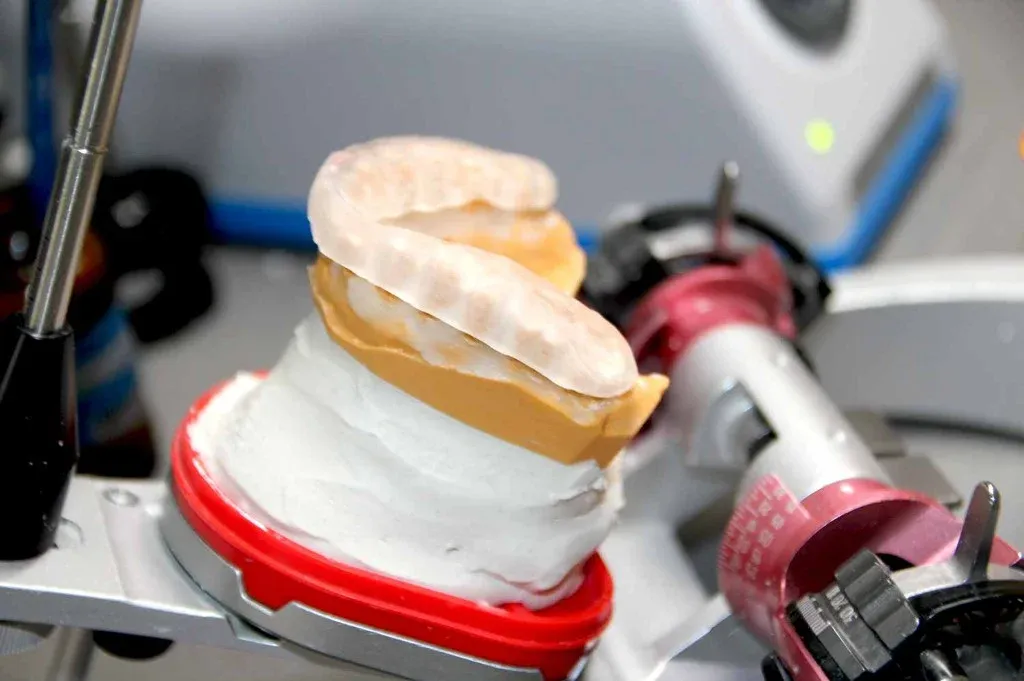
A trimmed laminate on the articulator, occlusion being refined against the opposing model

How It Is Formed

Thermoformed, Trimmed, Then Adjusted on the Articulator

The laminate sheet is heated and formed over a model of the arch, cooled so the fit comes out tight rather than slack, then cut off and trimmed. What decides whether it seats in one visit happens after that.

Trim line is worth a line on the RX. Extended slightly onto the tissue, the guard grips harder and is likelier to still be in the mouth by morning; trimmed high at the margin, it is easier for the patient to get used to. Tell us which trade you want.

  • Articulated: Models set against the opposing arch using your bite registration.

  • Trimmed: Trim line covers the arch without impinging on tissue or the frenum.

  • Occlusion refined: Even contacts on the hard outer shell, no working interference.

  • Polished: Adjusted surfaces polished back, not left as cut.

Learn more

Patient care, in one line

Cold water and a brush. No hot water, no dishwasher, no boiling — heat is what drives the layers apart. A patient who runs a laminate through the dishwasher is buying a replacement.

Choosing the Case

Which Bruxism Cases Suit a Dual Laminate

Indicated for

  • Bruxers who need a rigid occlusal surface but would not tolerate a hard-only guard
  • Shallow undercuts or short clinical crowns, where a rigid guard will not stay seated
  • Full-arch nighttime protection over sound dentition and existing restorations
  • Cases where you will refine the occlusion chairside and want it to hold

Consider an alternative when

  • Interocclusal clearance is tight. Thermoformed thickness is uneven; a printed guard controls it
  • Splint therapy calls for a reproducible flat plane and stable centric stops on a rigid appliance
  • The patient has already destroyed appliances. Durability and the ability to service the guard are what matter now, and that is a Talon nightguard
  • The patient has reacted to a conventional acrylic appliance and the material itself is the question. That call belongs to you, and CLEARsplint is the appliance you specify it on
  • The guard will routinely meet heat: hot water, a dishwasher, a car dashboard. Heat is what drives the layers apart

Build Sheet

Comfort H/S Nightguard Specifications

How we build, finish and service a Comfort H/S guard.

Build and finish data for a Comfort H/S guard.
Appliance Thermoformed dual laminate occlusal guard. H/S is hard/soft: a soft resilient inner layer bonded to a rigid outer layer
Coverage Full-arch, upper or lower. Specify the arch on the RX
Thickness Sheet gauge specified with the case. Thermoforming is not uniform: material thins over cusp tips, pools in the fossae
Occlusal adjustment Refined on the hard outer shell against the opposing model, then polished. A chairside adjustment holds
Retention From the soft inner layer engaging the undercuts, not from a rigid shell squeezed onto the teeth
Known failure mode Delamination. The layers separate at the margin, sooner under heavy parafunction and repeated heat. A separated laminate cannot be re-bonded, so the appliance is replaced rather than repaired
Patient care instructions Cold water and a brush. No hot water, no dishwasher, no boiling. Heat drives the layers apart
Turnaround Quoted per case at intake

Thickness varies across a thermoformed appliance by nature, and delamination timing depends on parafunction and heat exposure. These are qualities of the process, not lab-set figures.

What to Send

Sending a Comfort H/S Nightguard Case

A laminate is the right appliance or the wrong one for two reasons, and only one of them is in the files: how much room there is between the arches, and how hard this patient bites. The second we can only get from you.

In the case package:

  • A scan or impression of the arch to be guarded, plus the opposing arch
  • A bite registration, the record that decides how the occlusal surface gets adjusted
  • Which arch, and your trim line preference
  • A note if interocclusal clearance is limited anywhere
  • Any crown, onlay or veneer you are planning on this arch

That last item catches more cases than practices expect. A guard formed over an arch that is about to receive a new crown will not seat over it. Guard after the restorative work, or tell us what is coming. Upload the case, or open an account.

Start a case

Send one case. Keep the scanner.

Open a partner account and your first case moves with a shade record and our remake guarantee — if a unit does not seat, we redo it at no charge.

  • Free 3Shape TRIOS 6 scanner for active partners
  • Under-2% remake rate — remakes at no charge
  • One named technician you reach directly — no call center

Prefer to talk? +1 747-268-0808

No call center — you hear back from the lab, not a bot.

Answers

Dual Laminates: What Dentists Ask Before Prescribing One

No. Only the layer touching the teeth is soft; the surface the patient occludes on is rigid, so it holds the shape you grind into it. A purely soft guard rebounds under the bur and under the bite. You can adjust it, but it will not stay adjusted, and a heavy bruxer ends up chewing it.

Two dissimilar materials bonded together and loaded night after night let go at the margin, where the stress concentrates. Heat brings that day forward; hence the cold-water-and-a-brush instruction. A separated laminate cannot be re-bonded, so the appliance is replaced rather than repaired. A patient who separates guards quickly is telling you what force they generate, and a hard processed guard that can be repaired and relined is the next move.

See the Talon nightguard

Tell us before we form anything. Thermoforming stretches a flat sheet over a three-dimensional arch, so material thins over the cusp tips and pools in the fossae. Thickness is a range, not a number. Where clearance is tight, that is the wrong property to introduce; a printed guard suits the case better.

See Comfort3D nightguards

Work on the hard outer surface. Mark the contacts, relieve the heavy ones, confirm even contact across the arch; the shell takes an adjustment cleanly and keeps it. Take the shell back to a polish before the patient leaves. A bur-scored surface is an abrasive one, and it spends every night against enamel. Leave the soft inner layer alone.

A missing opposing arch, mostly. A laminate is trimmed and its occlusal surface refined against the opposing model, so with only one arch on the bench there is nothing to refine against and the sheet does not get heated. A bite record the models will not seat into does the same thing. Then somebody here has to call the practice, and the call is the wait — the forming itself is quick. Ask us for the date when you submit; we quote it case by case.

Switching labs, de-risked

New to us? Send the first case with both arches and a bite. If a guard does not seat, we make it right — and we keep your trim-line and arch preferences on file, so the next case starts from what worked.

Partner Offer

A Free Intraoral Scanner for Partner Practices

Partner with Universal Dental Lab and we place a 3Shape TRIOS 6 Wireless in your operatory — free for the length of our partnership. Scan the prep, send it in seconds, and skip impressions entirely.