

Quality Assurance Process

Reliability is built in, not inspected in at the end. We check the records a dental practice sends at intake, the design in CAD, and the restoration at every stage — so most remakes never start.

Quality that lives only in a final inspection is quality applied too late. By the time a finished restoration is examined, the time and material are already spent — and a records problem that could have been a phone call has become a remake.

Jahn De Khudikine, Founder · Universal Dental Lab
Jahn De Khudikine Founder · Universal Dental Lab

Why send it here

The cheapest defect is the one you catch first. So we check before anything is made.

A practice's schedule lives or dies by the lab — I've watched one late case push back a whole day of chair time.

So I still know the cases moving through this lab, and I answer for how each one is made. Send a case here and it doesn't drop into a queue — it lands with me and one technician who carries it start to finish.

Start a case
Caught before it is made
The heaviest checking sits at intake, not the finish A records problem stays a phone call, not a remake
Checked at every stage
CAD, in process and final — not a single glance Fit, margins, contacts and occlusion verified each pass
Your technician
One planner holds your case Reach them directly — no call-center queue
Free scanner
3Shape TRIOS 6 for partners Go fully digital at no cost
Universal Dental Lab QA intake sheet

What our intake review verifies first

  • An intraoral scan or impression
  • A bite registration that fully captured
  • A clear prescription with indication and material
  • Shade documentation
  • Implant part details where relevant
  • A margin that reads clearly

The single most useful thing you can provide is a clear margin and a bite that captured — those are what the intake review verifies first.

How We Keep It Consistent

Intake Is Where Remakes Are Prevented

Our quality assurance process runs front to back, and it starts before production. Every case is reviewed against its records before it enters production — because most of what would become a remake is a records issue, and this is where it is caught.

Front-loaded
The heaviest checking is at the beginning, where a records or design issue costs a message to fix instead of a rebuilt case. Most of what would become a remake is caught at intake, before a single unit is made.
Checked in CAD
Margins, contacts, occlusal clearance, emergence and connector strength are verified in the digital design before fabrication — a problem corrected as pixels, not as a milled or layered restoration that has to be scrapped.
Documented
What was checked and any clarification is recorded on the case, so the history is clear if a question comes up later and recurring issues can be spotted across cases, not just within one.
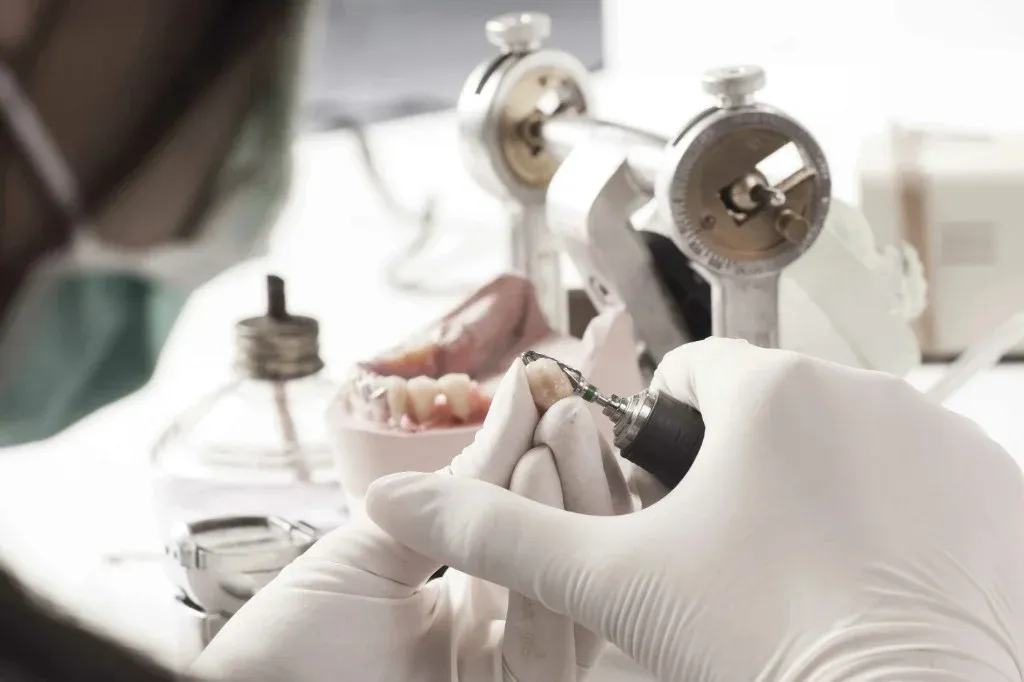
Technician reviewing a case scan and prescription against the model at intake

Intake First

Where Remakes Are Prevented

Every case is reviewed against its records before it enters production: does the margin read clearly, did the bite capture, do the shade and the prescription agree, are the implant parts specified. Most of what would become a remake is a records issue, and this is where it is caught — see how the case remakes policy traces returns back to exactly these inputs.

  • Records and prescription agree: The scan, bite, prescription and shade are checked against one another before the case moves on.

  • Checked in the design: Margins, contacts, occlusal clearance, emergence and connector strength verified in CAD before fabrication.
Learn more
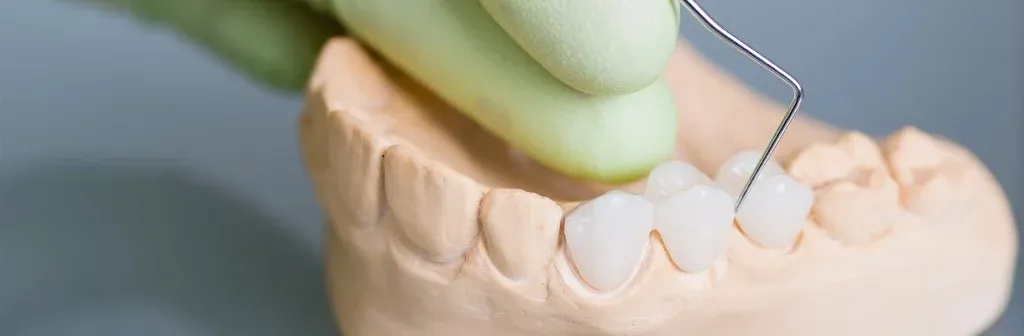
Finished restoration under corrected lighting at final inspection with a QA record beside it

Consistency Over Heroics

A Good Result as the Standard Output

The goal of a documented quality process is not an occasional exceptional case — it is a reliable one, every time, regardless of which technician handled it. Validated materials, calibrated equipment, and checks recorded per case are what make consistency the default rather than a happy accident.

That is also what makes the exceptions visible. When issues are documented, a recurring pattern — a scanner artifact, a repeated prep detail — surfaces across cases and gets addressed at the source.

  • Validated materials: Calibrated equipment and per-case checks make the good result the default output, not a happy accident.

  • Patterns surface: Documented issues let a recurring artifact or prep detail be spotted across cases and fixed at the source.

Learn more

Where the specifics are documented

The exact checklists, tolerances, and material validations are maintained by the lab and applied per indication. For difficult cases, a complex case review adds a deliberate check before fabrication even begins — the earliest and most effective point in the quality process — and the case remakes policy traces any return back to the records it started from.

The Process

How a Case Moves Through QA

Five checkpoints from records to shipment — weighted toward the front, where prevention is cheapest.

  1. Records review at intake

    Lab

    Before a case enters production, we check that the scan, bite, prescription, and shade actually agree — a clear margin, a bite that captured, the implant parts specified. Most remakes are caught here, before a single unit is made.

  2. Design review in CAD

    Lab

    Margins, contacts, occlusal clearance, emergence, and connector strength are checked in the digital design. If the records force a compromise, we raise it with you rather than building around it silently.

  3. In-process checks

    Lab

    As the case is milled, printed, pressed, or layered, it is checked against the design at the stages where an error is still cheap to correct — fit on the model, margin integrity, framework before ceramic.

  4. Final inspection

    Lab

    Before it ships, every restoration is inspected for fit, margins, contacts, occlusion, contour, and shade against the prescription and the records — under corrected lighting for esthetic cases.

  5. Documented and traceable

    Lab

    What was checked and any clarification is recorded on the case, so the history is clear if a question comes up later and recurring issues can be spotted across cases, not just within one.

What front-loaded QA actually buys you

  • Caught before it is made

    The cheapest defect to fix is the one found at records review. Front-loading the checks is why most potential remakes never reach production.

  • Checked at every stage

    Fit, margins, contacts, and occlusion are verified in CAD, in process, and at final inspection — not left to a single glance before the box is sealed.

  • Consistent, not heroic

    Documented checks and validated materials make a good result the standard output, rather than something that depends on which technician touched the case.

Start a case

Send one case. Keep the scanner.

Open a partner account and your first case moves with a shade record and our remake guarantee — if a unit does not seat, we redo it at no charge.

  • Free 3Shape TRIOS 6 scanner for active partners
  • Under-2% remake rate — remakes at no charge
  • One named technician you reach directly — no call center

Prefer to talk? +1 747-268-0808

No call center — you hear back from the lab, not a bot.

Quality Assurance FAQ

Quality Assurance Process — Questions Dentists Ask

Quality assurance starts with the records you send, so complete inputs make the checks meaningful: an intraoral scan or impression, a bite registration, a clear prescription with the indication and material, shade documentation, and implant part details where relevant. The single most useful thing you can provide is a clear margin and a bite that fully captured — those are what our intake review verifies first. When something in the file is ambiguous, we ask before production rather than assume.

Digital cases are easier to quality-check, because the design can be reviewed against the records in CAD before anything is produced. We accept scans from iTero, 3Shape, and Medit, and the intake review flags scan artifacts, unclear margins, or a bite that did not capture before the case moves into production. Conventional impressions are digitized and run through the same checkpoints.

How to send a file

Restoration quality control here is front-loaded: the biggest single reduction in remakes comes from catching records and design issues at intake and in CAD, before production commits time and material. From there, in-process and final inspections verify fit, margins, contacts, and occlusion at each stage. Documented checks and validated materials keep the result consistent case to case.

Most of it runs inside the normal production path. The main variable is whether a case arrives with complete records or needs a clarification round at intake — that is the step that most often adds time. A clean, complete submission moves through review without pauses.

Yes. For difficult cases, planning and a complex case review add a deliberate check before fabrication even begins — the earliest and most effective point in the quality process. Involving the lab before production is where the issues that would otherwise become remakes get resolved on screen.

Complex case review

Partner Offer

A Free Intraoral Scanner for Partner Practices

Partner with Universal Dental Lab and we place a 3Shape TRIOS 6 Wireless in your operatory — free for the length of our partnership. Scan the prep, send it in seconds, and skip impressions entirely.