

Zirconia Crowns

High-strength monolithic and layered zirconia, milled to tight margins and finished to seat in a dentist's chair without a twenty-minute adjustment.

Zirconia has become the default posterior material for a reason: it takes load, it mills predictably, and modern translucency grades finally look like teeth.

Jahn De Khudikine, Founder · Universal Dental Lab
Jahn De Khudikine Founder · Universal Dental Lab

Why send it here

You promised your patient a date. We build to it.

A practice's schedule lives or dies by the lab — I've watched one late case push back a whole day of chair time.

So I still know the cases moving through this lab, and I answer for how each one is made. Send a case here and it doesn't drop into a queue — it lands with me and one technician who carries it start to finish.

Start a case
Quoted at intake
Turnaround per case Rush available when the seat date needs it
Model-checked
Before it ships Margins and occlusion verified on the articulator
Your technician
One person holds your case Reach them directly — no call-center queue
Free scanner
3Shape TRIOS 6 for partners Go fully digital at no cost

Material Comparison

Zirconia, e.max or PFM?

The three crown materials dentists ask us to compare most often. Pick the one the case needs — we mill all three.

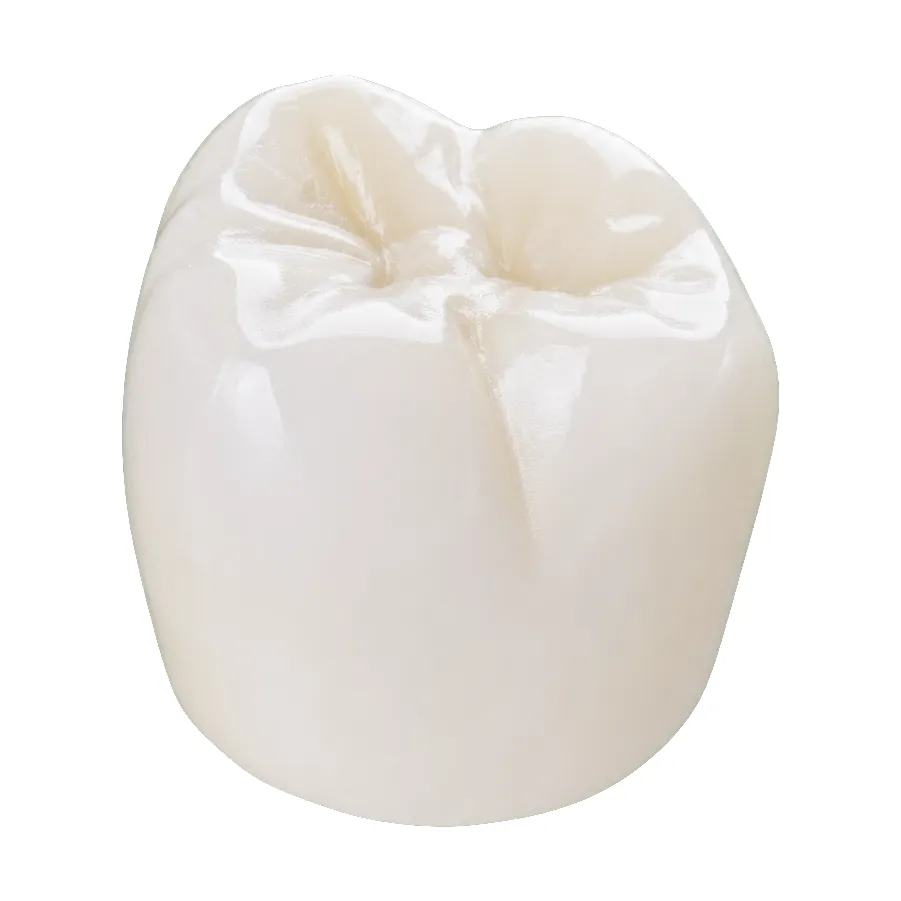
A monolithic zirconia crown, occlusal view.
Zirconia Crowns You are here
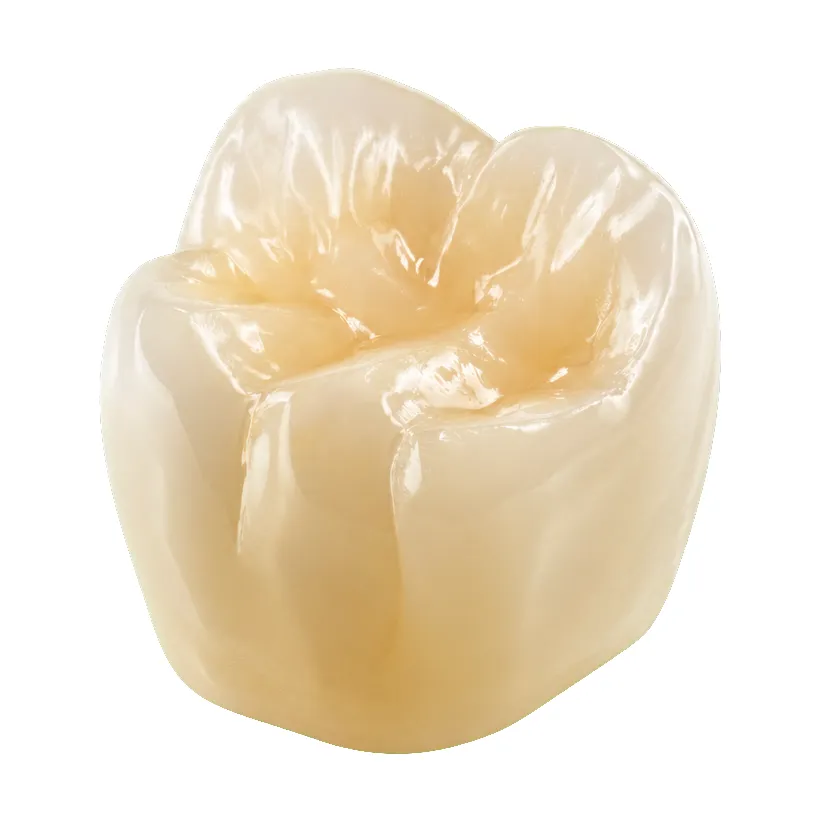
An IPS e.max lithium-disilicate crown, occlusal view.
IPS e.max Crowns
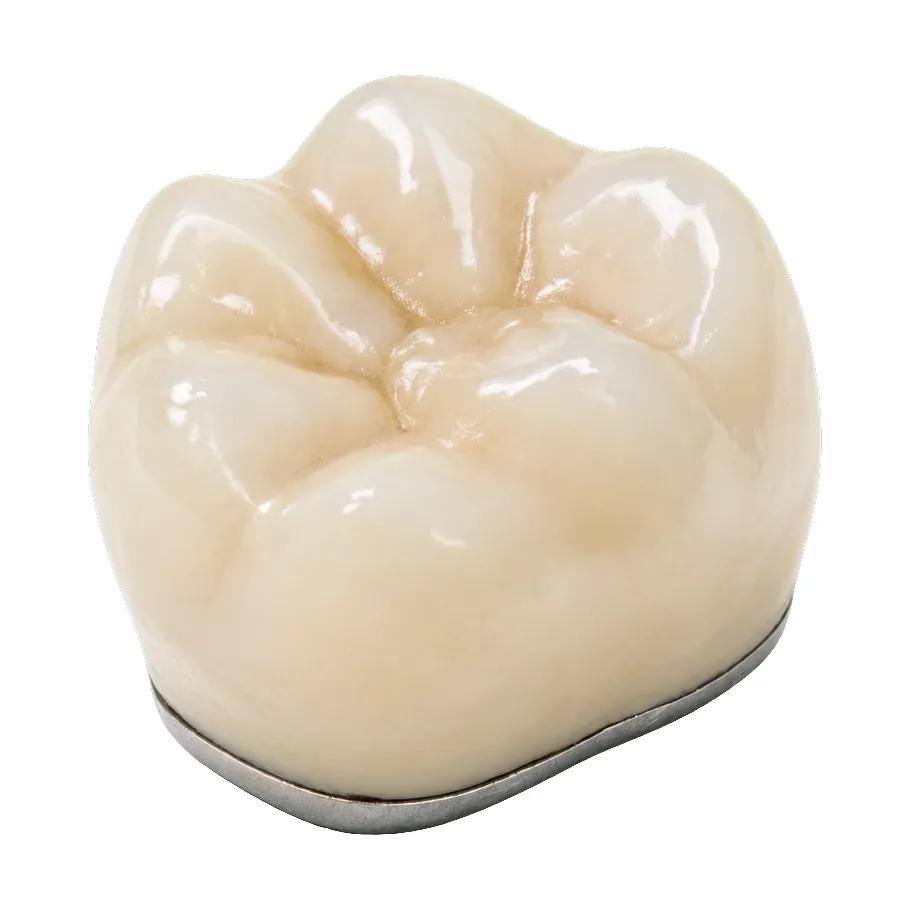
A porcelain-fused-to-metal crown with the metal collar visible at the margin.
PFM Crowns
Typical flexural strength ~550–1,200 MPa depending on grade ~400 MPa (lithium disilicate) Cast metal substructure
Esthetics Good to excellent rises with the translucency grade Excellent Good opaque core limits depth
Best for Occlusal load, bruxism, bridges, implants Anterior and premolar esthetics, adhesive cases Proven durability, long-span frameworks

Flexural strength and translucency vary by manufacturer, grade and sintering protocol. The figures above are typical published values — confirm case-specific requirements with the lab before you prep.

Material
Yttria-stabilized zirconia
Flexural strength
~550–1,200 MPa
Occlusal reduction
1.0–1.5 mm
Turnaround
Quoted per case at intake
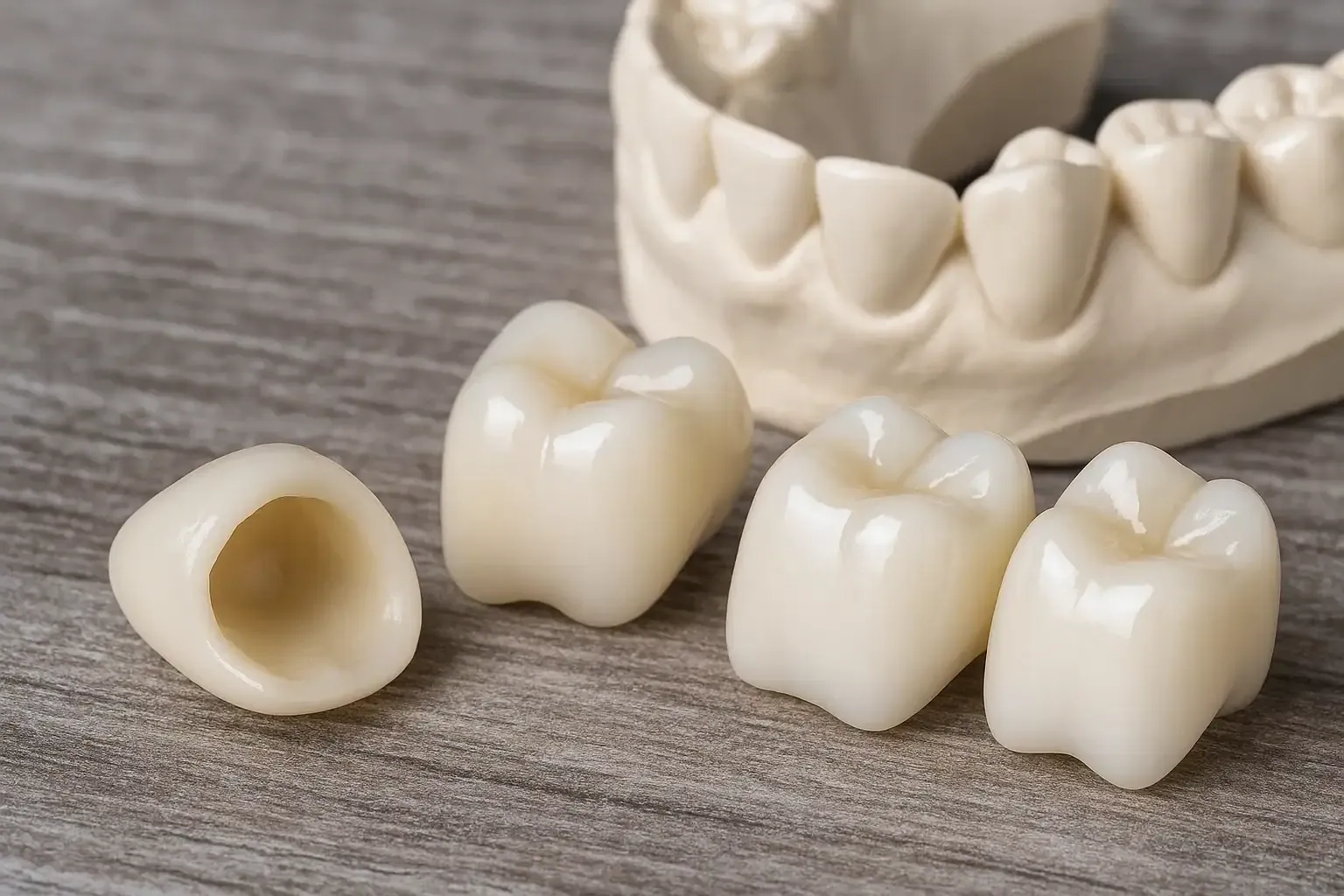
Several finished monolithic zirconia crowns on a bench, next to a dental model.
Monolithic zirconia crowns, glazed and finished.

Overview

Strength First, Without Giving Up the Esthetic Zone

We mill zirconia crowns from pre-sintered blanks and select the grade to fit the case rather than defaulting to one block for everything.

  • Monolithic: Posterior units are usually delivered stained and glazed, with no porcelain to chip.

  • Cut back and layered: In the anterior we cut back the facial surface and layer feldspathic porcelain over the core, trading a little strength for depth and internal characterization.
Learn more
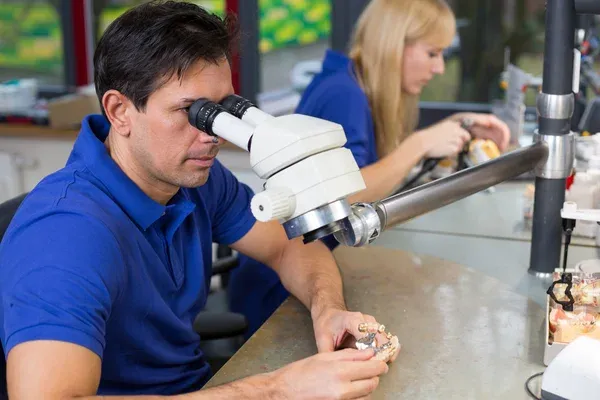
A dental technician examining a restoration under a stereo microscope at the bench.
A technician checks the unit under the bench microscope before it ships.

At the Bench

Milled, Sintered, Finished by Hand

Every unit is designed in CAD against your scan, nested and milled, then sintered and finished at the bench. Margins that are unclear in the scan are the single most common cause of a remake — if we cannot read one, we will ask before milling rather than guess.

  • Margin integrity: Verified under magnification before the unit goes anywhere near a box.

  • Contacts and occlusion: Adjusted on the articulated model and checked against the opposing model.

  • Surface: Polished after any adjustment — never left rough.

Learn more

Before you cement

Zirconia cannot be etched with hydrofluoric acid — it has no silica phase to etch. For an adhesive bond, air-abrade the intaglio and use a primer containing MDP.

Case Selection

When Zirconia Is the Right Call

Indicated for

  • Posterior single units carrying heavy occlusal load
  • Patients with bruxism or limited interocclusal clearance
  • Multi-unit and longer-span posterior bridges
  • Implant-supported and screw-retained restorations
  • Conservative monolithic restorations where prep depth is limited

Consider an alternative when

  • Maximum anterior translucency and layering effects drive the case — IPS e.max is often the better call
  • The restoration is veneer-thin and depends on adhesive bonding to enamel
  • A specific long-span design calls for a cast metal substructure
  • The opposing dentition is heavily worn and occlusal scheme has not been resolved

Specifications

Zirconia Crown Specifications

Preparation, cementation and material data for planning the case chairside.

Typical values for the zirconia grades we mill.
Material Yttria-stabilized zirconia, milled from pre-sintered blanks (3Y, 4Y and 5Y translucency grades)
Typical flexural strength Approx. 1,100–1,200 MPa (3Y, highest strength) down to approx. 550–750 MPa (5Y, highest translucency)
Translucency Rises with yttria content — 3Y is the most opaque and strongest, 5Y the most lifelike in the esthetic zone
Occlusal reduction 1.0–1.5 mm
Axial reduction 1.0–1.5 mm
Margin design Chamfer or rounded shoulder, 0.5 mm or greater. Supragingival or equigingival finish lines preferred
Cementation Conventional or self-adhesive resin cement. For adhesive protocols, air-abrade the intaglio and use an MDP-containing primer — zirconia cannot be etched with hydrofluoric acid
Finishing Monolithic with stain and glaze, or cut back and layered with feldspathic porcelain in the anterior
Restoration types Single units, anterior and posterior, multi-unit bridges, implant-supported and screw-retained
Turnaround Quoted per case at intake

Flexural strength and translucency vary by manufacturer, grade and sintering protocol. Ranges above are typical published values — confirm case-specific requirements with the lab before you prep.

Case Submission

Sending a Zirconia Case

We accept scans from all major intraoral systems, including iTero, 3Shape and Medit — or a traditional impression if your practice has not gone digital.

Include with the case:

  • STL of the prepped arch and the opposing arch
  • Bite registration
  • Shade — and a stump shade when the prep is discolored
  • Photographs for anterior and any layered case
  • A note on the zirconia grade if you have a preference

New to the lab? Open an account and we will walk you through the first case.

Start a case

Send one case. Keep the scanner.

Open a partner account and your first case moves with a shade record and our remake guarantee — if a unit does not seat, we redo it at no charge.

  • Free 3Shape TRIOS 6 scanner for active partners
  • Under-2% remake rate — remakes at no charge
  • One named technician you reach directly — no call center

Prefer to talk? +1 747-268-0808

No call center — you hear back from the lab, not a bot.

Zirconia FAQ

Zirconia Crowns — Questions Dentists Ask

It is a trade-off between strength and translucency. A 3Y grade gives the highest flexural strength and suits posterior units, bruxers and longer-span bridges. A 5Y grade is far more translucent and reads better in the esthetic zone, at the cost of strength. Tell us the tooth, the opposing dentition and the esthetic demand, and we will recommend the grade — or cut back and layer the anterior surface.

Conventional and self-adhesive resin cements both work well because retention comes primarily from the preparation. When you want an adhesive bond, air-abrade the intaglio surface and use a primer containing MDP. Do not attempt to etch zirconia with hydrofluoric acid — unlike glass ceramics, it has no silica phase to etch, and HF will not create a bondable surface.

Plan on 1.0–1.5 mm occlusally and axially, with a chamfer or rounded shoulder margin of at least 0.5 mm. Monolithic zirconia tolerates a more conservative prep than layered ceramics, but sharp line angles and knife-edge margins still cause problems in the mill. If clearance is tight, tell us before you scan and we will advise.

A properly polished zirconia surface is kind to opposing enamel — studies consistently show it causes less wear than unpolished or rough ceramic. The risk comes from a glazed surface that has been adjusted chairside and then left unpolished. If you adjust the occlusion at seating, repolish the contact with a zirconia polishing kit.

Yes. Higher-strength grades handle multi-unit and longer-span posterior bridges, and zirconia is a routine choice for screw-retained and implant-supported restorations. For implant work send the implant part details along with the scan so we can select the correct components.

See implant restorations

Switching labs, de-risked

New to us? If a unit does not seat, we remake it at our cost when it is a lab error. We keep a shade record for your practice, so the second case starts from what worked on the first. See what the remake policy covers.

Partner Offer

A Free Intraoral Scanner for Partner Practices

Partner with Universal Dental Lab and we place a 3Shape TRIOS 6 Wireless in your operatory — free for the length of our partnership. Scan the prep, send it in seconds, and skip impressions entirely.