
Metal Casting

Lost-wax casting for the metal a case is built on — PFM frameworks, CoCr partials and full cast crowns for dental practices, in the alloy the indication calls for.

Some of the most reliable work a lab produces is still cast. Lost-wax casting turns a wax or printed pattern into a solid alloy framework — the foundation under a PFM crown, the rigid skeleton of a partial, the full-contour gold unit that outlasts everything around it.

Jahn De Khudikine, Founder · Universal Dental Lab
Jahn De Khudikine Founder · Universal Dental Lab

Why send it here

A casting with porosity fails at the connector. We invest and cast to a verified pattern.

A practice's schedule lives or dies by the lab — I've watched one late case push back a whole day of chair time.

So I still know the cases moving through this lab, and I answer for how each one is made. Send a case here and it doesn't drop into a queue — it lands with me and one technician who carries it start to finish.

Start a case
Pattern to metal
What we design in wax or resin is what casts Milled, printed, or hand-waxed
Cast to fit
Framework seating verified on the model before it ships High-noble · noble · base-metal
Your technician
One person holds your case Reach them directly — no call-center queue
Free scanner
3Shape TRIOS 6 for partners Go fully digital at no cost

Workflow

From Pattern to Finished Casting

A controlled four-step path, with a fit check on the model before the case moves on.

  1. Design & Pattern

    We design the coping or framework — from your scan digitally, or in wax on the model — and produce the pattern that will be cast, including sprues and reservoirs.

  2. Invest

    The pattern is sprued and invested in a casting ring, and the investment is set to hold detail through burnout and casting.

  3. Burnout & Cast

    The ring is burned out to eliminate the pattern, then the selected alloy is cast into the mold under heat to fill the framework fully.

  4. Devest, Finish & Inspect

    The casting is devested, finished, and fit-checked on the model — margins and framework seating verified before it moves to ceramic or ships.

Input
STL or impression
Alloy
Matched to the indication
Method
Lost-wax casting
Turnaround
Quoted per case at intake
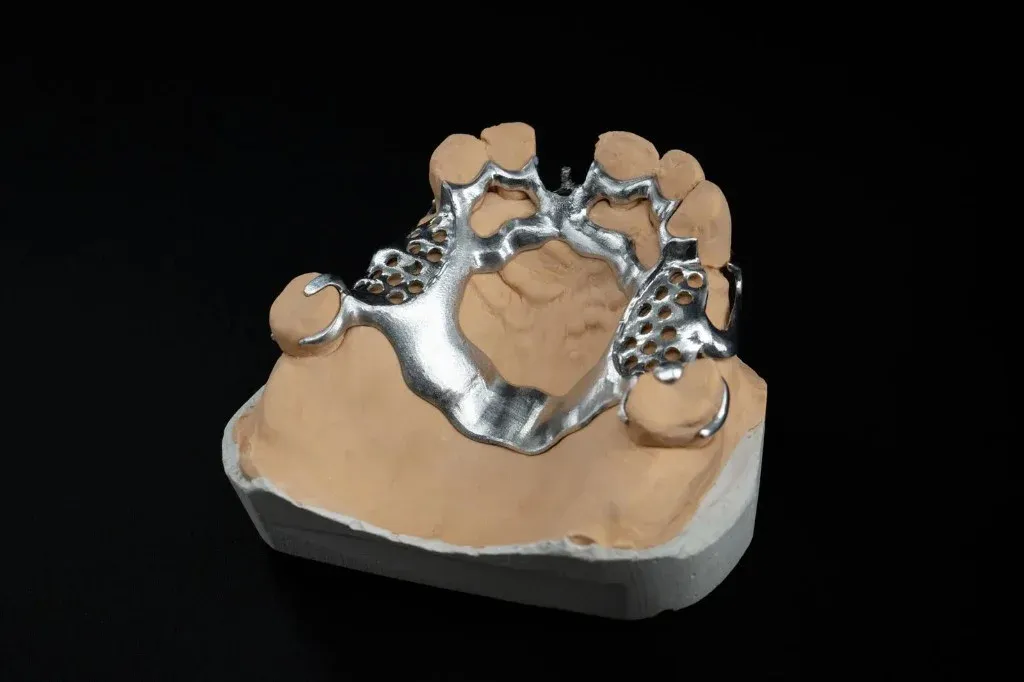
Cast CoCr partial framework and a PFM coping side by side on models

Overview

Metal Casting for Frameworks and Cast Restorations

Some of the most reliable work a lab produces is still cast. Lost-wax casting turns a wax or printed pattern into a solid alloy framework — the foundation under a PFM crown, the rigid skeleton of a partial, the full-contour gold unit that outlasts everything around it.

Casting has not been replaced so much as joined. Milling and printing took over ceramics, models, and guides, but for a removable partial framework with integral rests and clasps, a PFM substructure, or a full cast alloy crown, casting remains the method that gets the metal right.

  • Not replaced, joined: Milling and printing own ceramics, models, and guides; casting still gets alloy frameworks right.

  • Fit and connector strength: A metal casting lab lives or dies on framework fit — so we verify it before the case moves on.
Learn more
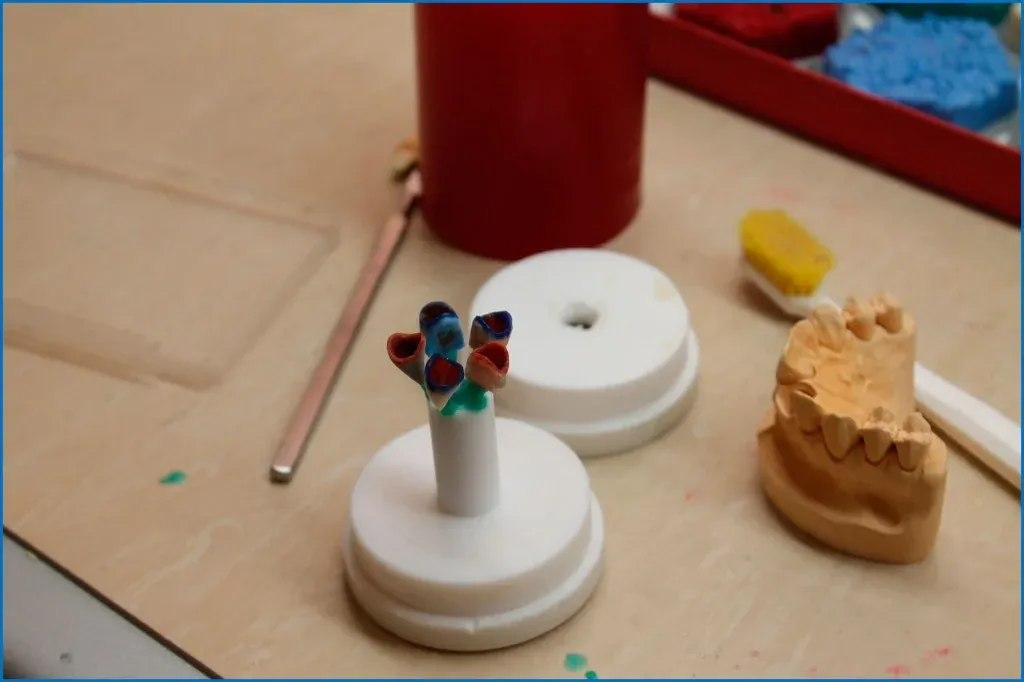
Sprued castable pattern in a casting ring, ready to invest

The Pattern Is the Restoration

Lost-Wax Casting, Digital or by Hand

Casting reproduces the pattern exactly, so the pattern is where the case is decided. We build it as a milled or printed castable pattern from your digital design, or wax it on the model — whichever the case suits — with sprues placed so the alloy fills the framework completely.

  • Digital or conventional: A printed or milled castable pattern from your STL, or a wax pattern where the case calls for it.

  • Sprue and reservoir design: Placed so the alloy fills the framework completely, edge to edge.

Learn more
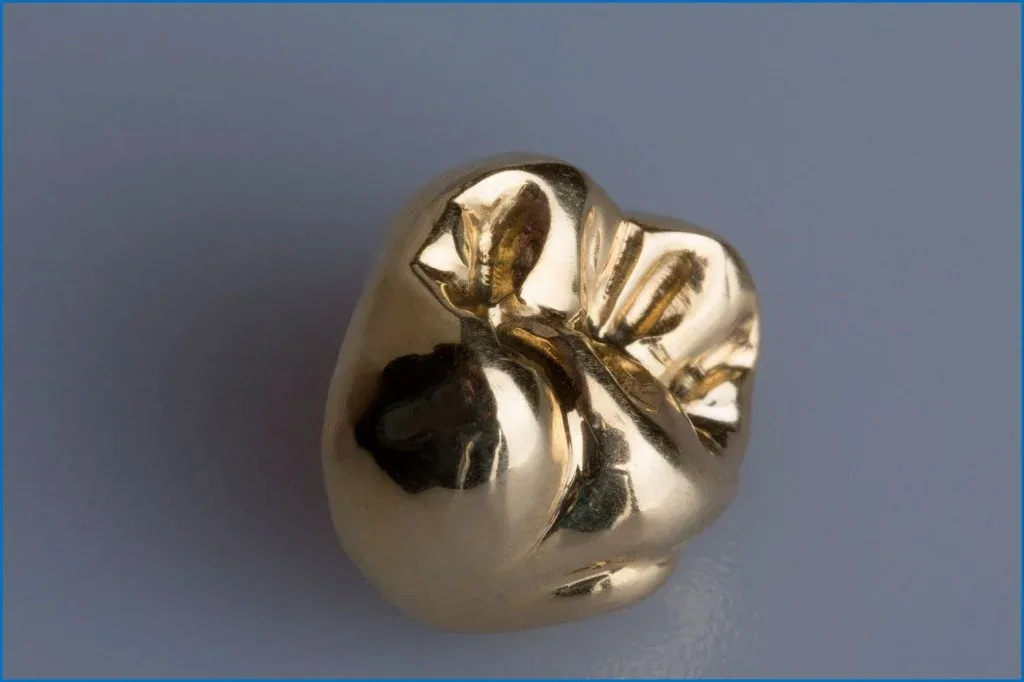
Full cast gold crown beside a CoCr framework, showing the alloy contrast

Alloy Selection

The Right Alloy for the Indication

Alloy is a clinical decision, not a default. High-noble and noble alloys bring biocompatibility and forgiving wear behavior for full cast crowns and PFM; base-metal alloys such as CoCr bring rigidity and value for partial frameworks and copings. The opposing dentition, the span, and your preference all steer the choice.

Where a case points clearly to one alloy over another — a full gold crown against a natural opposing tooth, a rigid CoCr framework for a long-span partial — we say so rather than casting whatever is on the bench.

  • The full alloy range: High-noble, noble, and base-metal — each cast to its indication, not a house default.

  • Steered by the case: Opposing dentition, span, and your preference decide the metal, and we advise where it points one way.

Learn more

Applications

What We Cast

From a single cast coping to a full CoCr partial framework — the cast metal a restorative and removable caseload needs.

PFM Copings & Frameworks

Cast substructures for porcelain-fused-to-metal crowns and bridges, built to support the ceramic and seat with a clean metal margin.

Cast Partial Frameworks

CoCr removable partial denture frameworks with rests, clasps, connectors, and mesh cast as one rigid piece for retention and support.

Full Cast Crowns

Full-contour gold and high-noble crowns for posterior teeth where alloy longevity and gentle wear on the opposing dentition matter most.

Non-Precious Alloy Crowns

Base-metal crowns and copings where strength and cost-efficiency are the priority for the case.

Post & Cores

Cast post-and-core foundations for endodontically treated teeth that need a custom-fit substructure before the final crown.

Bridge Substructures

Multi-unit cast frameworks with connectors dimensioned for the span before ceramic or acrylic is added.

Method Selection

When Casting Is the Right Method

  • PFM copings and bridge substructures
  • CoCr removable partial frameworks with integral rests and clasps
  • Full cast gold and high-noble crowns
  • Non-precious alloy crowns and copings
  • Cast post-and-cores for endodontically treated teeth
  • Wax or printed castable patterns feeding the casting bench

When a case needs both, we combine cast and milled or printed components in one workflow — a milled or printed pattern often feeds the casting itself.

Advantages

Why Cast the Case

  • A Proven, Durable Method

    Lost-wax casting has a long clinical track record. For alloy frameworks and PFM substructures it remains a dependable, well-understood way to make metal fit.

  • The Full Alloy Range

    High-noble, noble, and base-metal alloys are each cast to their indication — biocompatibility, wear behavior, and cost matched to the case.

  • Complex Geometry in One Piece

    A partial framework with rests, clasps, and connectors is cast as a single rigid unit, holding the relationships a segmented approach cannot.

  • Repairable and Solderable

    Cast metal can be adjusted, soldered, and repaired down the line — a practical advantage over the life of a framework or bridge.

Where casting earns its place

Milling and printing took over ceramics, models, and guides. Casting earns its place in PFM substructures, complex partial frameworks with integral rests and clasps, and full cast alloy crowns — the metal foundation a case is built on.

Materials & Quality

Alloys, Design, and Quality Control

Alloy Selection by Indication

We cast high-noble, noble, and base-metal alloys, matched to the case: gold and high-noble for full cast crowns and PFM substructures where wear and biocompatibility lead, CoCr for partial frameworks and cost-sensitive copings where rigidity leads. Our technicians recommend the alloy against the opposing dentition and the span rather than defaulting to one metal.

Read the full quality process Show less

Framework Design and Quality Control

Copings, connectors, rests, and clasps are designed and reviewed before casting, and the finished casting is fit-checked on the model — margins seated, framework passive, connectors dimensioned for the load. When the records or the design leave a question, we raise it before investing rather than casting around it.

Fit and Reliability

A framework that seats passively is the whole point. Verifying fit and framework seating before ceramic or acrylic is added keeps the finished case predictable — fewer adjustments at try-in and a foundation the restoration can be built on with confidence.

Case Submission

Sending a Metal Casting Case

We accept digital scans from iTero, 3Shape, and Medit, and conventional impressions — whichever your workflow uses.

To keep your case moving, include:

  • An STL or impression of the prepared arch and the opposing arch
  • The prescription with the indication and alloy preference
  • Bite registration and, for PFM, shade documentation
  • Framework design notes for removable partials — rests, clasps, connectors
  • Any survey or path-of-insertion notes for partial cases

Not fully digital yet? Send a physical impression and we will take it from there. New to the lab? Open an account and we will walk you through your first cast case.

Why Universal Dental Lab

Why Practices Cast With Us

  • Alloy and Framework Calls First

    Connector dimensions, sprue path, and alloy — precious or base — are confirmed with you before the ring is invested, not debated at delivery.

  • Controlled Casting Cycle

    Investing, burnout, and pour parameters are run to documented cycles so fit and framework seating stay repeatable across alloys.

  • Coping Through Partial Framework

    A single cast coping, a PFM substructure, or a full CoCr partial can move through the same casting QC without a handoff to another facility.

Start a case

Send one case. Keep the scanner.

Open a partner account and your first case moves with a shade record and our remake guarantee — if a unit does not seat, we redo it at no charge.

  • Free 3Shape TRIOS 6 scanner for active partners
  • Under-2% remake rate — remakes at no charge
  • One named technician you reach directly — no call center

Prefer to talk? +1 747-268-0808

No call center — you hear back from the lab, not a bot.

Metal Casting FAQ

Metal Casting — Questions Dentists Ask

We cast the metal work a lab is regularly asked for: PFM copings and bridge frameworks, CoCr removable partial denture frameworks, full cast gold and high-noble crowns, non-precious alloy crowns, post-and-cores, and multi-unit substructures. If a case needs a cast metal foundation before ceramic or acrylic, it fits our dental metal casting workflow.

Modern casting is often a digital-analog hybrid: we design the coping or framework from your STL scan, print or mill a castable pattern, and cast that. Physical impressions still work when the case is not digital. Either way we confirm framework and connector details before investing.

How to send a file

Casting and milling are complementary. Milling suits dense ceramic and precise milled metal, while casting remains a strong choice for PFM substructures, complex partial frameworks with integral clasps and connectors, and full cast alloy crowns. We recommend the method per case, and a milled or printed pattern often feeds the casting itself — so the two work together rather than competing.

We cast across the range: high-noble and noble alloys for full cast crowns and PFM where biocompatibility and wear behavior are priorities, and base-metal alloys such as CoCr for partial frameworks and cost-sensitive copings. The alloy is matched to the indication, the opposing dentition, and your preference, and we will advise where a case points to one over another.

Multi-unit PFM bridges, long partial frameworks, and cases where fit and passive seating are critical often include a metal try-in before porcelain. Tell us on the RX if you want that stage so casting and ceramic scheduling stay aligned. Connector design for partials is confirmed at framework try-in more often than on single copings.

CAD/CAM milling

Partner Offer

A Free Intraoral Scanner for Partner Practices

Partner with Universal Dental Lab and we place a 3Shape TRIOS 6 Wireless in your operatory — free for the length of our partnership. Scan the prep, send it in seconds, and skip impressions entirely.