
CAD/CAM Milling

Five-axis subtractive manufacturing behind the definitive work dental practices order — zirconia, lithium disilicate, and titanium cut from dense industrial blocks and finished to a fit set in the file.

Where a case needs strength and a margin that seats, it gets milled. Subtractive manufacturing cuts the restoration from a block manufactured under heat and pressure — homogeneous, dense, and more predictable than anything built up by hand.

Jahn De Khudikine, Founder · Universal Dental Lab
Jahn De Khudikine Founder · Universal Dental Lab

Why send it here

Milling can't fix a bad design file. We validate the STL before the spindle runs.

A practice's schedule lives or dies by the lab — I've watched one late case push back a whole day of chair time.

So I still know the cases moving through this lab, and I answer for how each one is made. Send a case here and it doesn't drop into a queue — it lands with me and one technician who carries it start to finish.

Start a case
From your scan
STL in — a seated definitive restoration out iTero · 3Shape · Medit
Cut from a block
Dense, homogeneous material — not layered up Marginal fit reproduced from the CAD design
Your technician
One person holds your case Reach them directly — no call-center queue
Free scanner
3Shape TRIOS 6 for partners Go fully digital at no cost

Workflow

From File to Finished Restoration

A predictable four-step path, with a fit check before the case leaves the lab.

  1. Design

    We import your STL, review the prescription, and design the restoration in CAD — margins, contacts, occlusion, and connector dimensions set before anything cuts.

  2. Mill

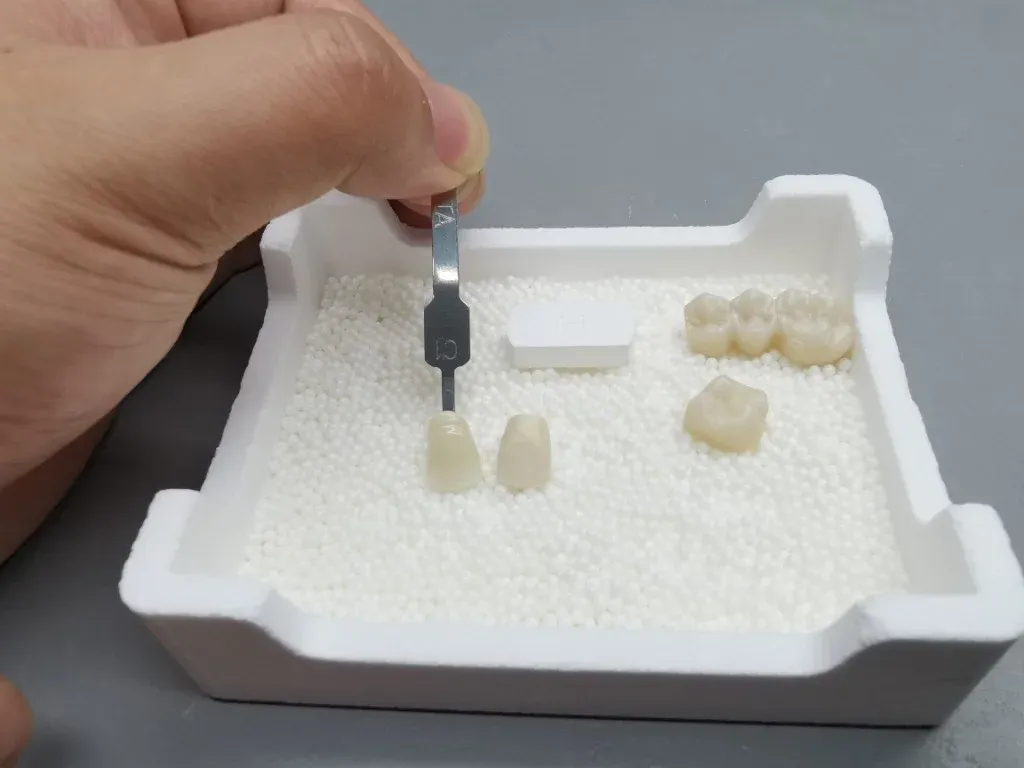
    The case is nested in the right block or puck and cut on a five-axis mill, with zirconia milled oversized to allow for sintering shrinkage.

  3. Sinter & Finish

    Zirconia is sintered to full density; all work is finished, and esthetic cases move to stain, glaze, or layering as prescribed.

  4. Inspect & Ship

    Fit, margins, contacts, and occlusion are checked against the design before the case ships on the turnaround we quoted.

Input
STL from iTero, 3Shape, Medit
Material
Matched to the indication
Sintering
To full density and strength
Turnaround
Quoted per case at intake
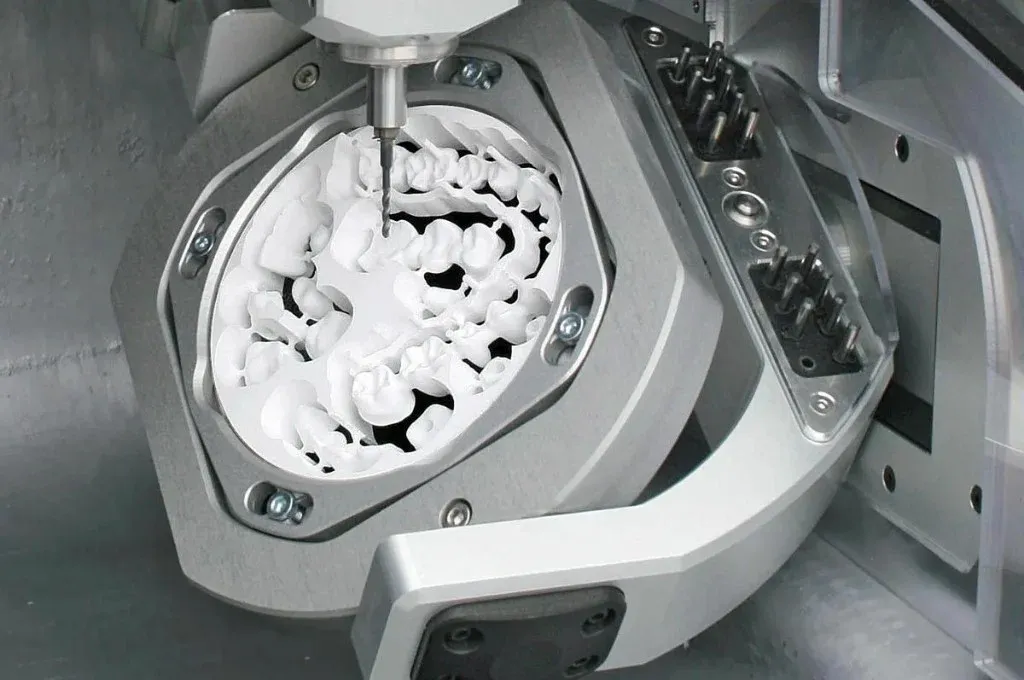
Five-axis mill mid-cut on a zirconia disc, restorations nested in the puck

Overview

CAD/CAM Milling for Definitive Restorations

Where a case needs strength and a margin that seats, it gets milled. Subtractive manufacturing cuts the restoration from a block that was manufactured under heat and pressure — homogeneous, dense, and more predictable than anything built up by hand.

The material is the argument. A zirconia puck or a lithium disilicate block is industrially processed to a uniform density with no layering voids, and five-axis milling reproduces the CAD margin to a fit you can seat. That combination is why definitive crowns, bridges, and bars are milled rather than printed.

  • One method in the shop, not the only one: Printing owns models, guides, and try-ins; casting still suits certain alloy frameworks.

  • Often the methods combine: A milled wax pattern can feed the casting bench on the same case.
Learn more
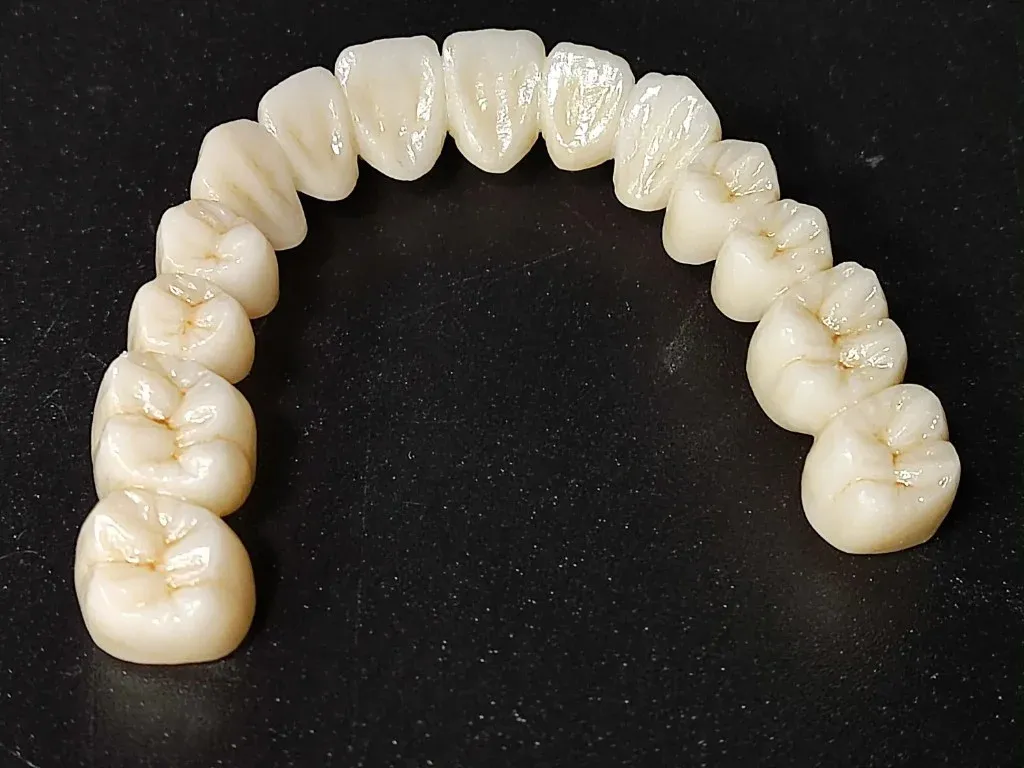
Long-span milled zirconia bridge held to the light as a single piece of material

From a Solid Block

Cut From Dense Material, Not Layered Up

A milled restoration starts as a homogeneous block and ends as a single piece of that same material — no internal seams, no build-layer voids. For a long-span bridge or a milled bar, that structural continuity is exactly what carries the load.

  • Homogeneous material: Industrially processed under heat and pressure — void-free through the section.

  • Marginal fit from the file: The CAD margin is reproduced by the mill and remilled to match, any time.

Learn more
Oversized pre-sintered zirconia crown beside a fully sintered one, showing the shrinkage

Zirconia Workflow

Milled Oversized, Sintered to Full Strength

Zirconia is milled in a pre-sintered state and cut oversized, then sintered to final dimension and full density. The controlled sintering cycle is what turns a chalky, machinable blank into a restoration with its rated strength — so the cycle is treated as carefully as the milling itself.

Multilayer blocks carry a built-in shade and translucency gradient, and we select 3Y, 4Y, or 5Y against the case — maximum strength for a posterior bridge, higher translucency for an anterior unit.

  • Milled oversized: Cut in a pre-sintered state, then sintered to final dimension and full density.

  • Multilayer, graded to the case: 3Y, 4Y, or 5Y selected against strength and translucency, not defaulted to one block.

Learn more

Applications

What We Mill

From a single zirconia unit to a full-arch titanium bar — the definitive and provisional work milling does best.

Zirconia Crowns & Bridges

Single units to long-span frameworks milled from 3Y, 4Y, and 5Y multilayer zirconia, then sintered to full density for strength and a natural gradient.

Lithium Disilicate Restorations

IPS e.max crowns, inlays, onlays, and veneers milled from pressed blocks where translucency and edge strength both matter.

Milled Titanium & CoCr

Implant bars, custom abutments, and RPD frameworks milled from solid metal for a fit and density casting cannot match on complex geometry.

PMMA Provisionals

Long-term temporaries and full-arch try-ins milled from homogeneous PMMA that holds contour and margin through the provisional phase.

Wax & Castable Patterns

Milled wax patterns for copings and frameworks that transfer cleanly into the casting or pressing workflow.

Custom Abutments & Ti-Bases

Patient-specific abutments milled to the implant connection, designed to the final restoration rather than adapted from stock.

Method Selection

When Milling Is the Right Method

  • Definitive zirconia crowns and bridges
  • Lithium disilicate crowns, inlays, onlays, and veneers
  • Milled titanium and CoCr bars and frameworks
  • Custom abutments and Ti-bases
  • Long-term PMMA provisionals and full-arch try-ins
  • Wax and castable patterns for the casting bench

When a case needs both, we combine milled and printed or cast components in one workflow — the method is chosen per case, not per lab habit.

Advantages

Why Mill the Case

  • Industrial Material Density

    A milled restoration comes from a puck manufactured under heat and pressure — homogeneous, void-free, and stronger than a hand-built equivalent.

  • Marginal Fit From the File

    Five-axis milling reproduces the CAD margin precisely, so seating and marginal integrity are set in the design, not chased at the chair.

  • Reproducible Every Time

    The case lives as a digital file. A remake or an added unit is milled to the same numbers instead of re-carved by a different hand.

  • Built for Definitive Work

    Where printing serves models and guides, milling produces the strong, seated definitive crowns, bridges, and bars a case ships on.

Where milling earns its place

Printing owns models, guides, and try-ins; casting still suits certain alloy frameworks. Milling earns its place in definitive zirconia and e.max, milled metal bars and frameworks, and precision abutments — the strong, seated work a case ships on.

Materials & Quality

Materials, Design, and Quality Control

Material Selection by Indication

The block is chosen for the job: multilayer zirconia graded by strength and translucency for crowns and bridges, lithium disilicate for esthetic single units, PMMA for provisionals, and titanium or CoCr for bars and frameworks. Where a case could go more than one way — strength versus translucency in the esthetic zone — our technicians lay out the trade-off before milling.

Read the full quality process Show less

Digital Design and Quality Control

Every case is designed and reviewed in CAD: margins, contacts, occlusal clearance, and connector dimensions are checked before the block is cut. After milling and sintering, the restoration is inspected for marginal fit and finish, and anything unclear in the submitted file is raised rather than assumed.

Fit and Reliability

Because the design drives the mill, marginal fit repeats and a remake matches the original. Multi-unit and full-arch work stays dimensionally consistent — which is what keeps seating predictable and chair-side adjustment to a minimum.

Case Submission

Sending a CAD/CAM Milling Case

We work with modern digital practices and accept scans from all major intraoral systems, including iTero, 3Shape, and Medit.

To keep your case moving, include:

  • An STL of the prepared arch and the opposing arch
  • The prescription with the indication and material preference
  • Bite registration and shade documentation for esthetic cases
  • Implant part details for milled bars, abutments, and frameworks
  • Notes on any clearance or span concerns you already see

Not fully digital yet? Send a physical impression and we will digitize it. New to the lab? Open an account and we will walk you through your first milled case.

Why Universal Dental Lab

Why Practices Mill With Us

  • Margin Calls in CAD

    Clearance, connector design, and margin quality are reviewed in the design file — you hear about a short prep before the block is committed to the mill.

  • Mill and Sinter Discipline

    Calibrated mills, validated discs and blocks, and a controlled sinter cycle keep marginal fit and strength where the material expects them.

  • Crown to Milled Bar

    Single-unit zirconia, layered ceramics, and full-arch milled bars can stay on one milling workflow instead of splitting across vendors.

Start a case

Send one case. Keep the scanner.

Open a partner account and your first case moves with a shade record and our remake guarantee — if a unit does not seat, we redo it at no charge.

  • Free 3Shape TRIOS 6 scanner for active partners
  • Under-2% remake rate — remakes at no charge
  • One named technician you reach directly — no call center

Prefer to talk? +1 747-268-0808

No call center — you hear back from the lab, not a bot.

Milling FAQ

CAD/CAM Milling — Questions Dentists Ask

We mill definitive and provisional work: zirconia crowns and bridges, lithium disilicate, titanium and CoCr bars, abutments and frameworks, PMMA provisionals, and wax or castable patterns. Models, surgical guides, and many try-ins stay in printing; PFM and some alloy frameworks still route through casting when the case calls for it.

Yes, when margins, bite, or implant captures are unclear — cutting a block on bad data wastes material and time. We review STL quality at intake and contact you before milling if something needs a re-scan or clarification. Clean preps and articulated bites are what make marginal fit repeatable on the mill.

How to send a file

The three are complementary, not competing. Milling produces strong, well-fitting definitive restorations from dense industrial blocks; printing is ideal for models, guides, and try-ins; casting still suits certain alloy frameworks and PFM substructures. We choose the method per case — and sometimes combine them, milling a wax pattern that is then cast.

For zirconia we work across 3Y, 4Y, and 5Y multilayer depending on whether the case needs maximum strength or maximum translucency, plus lithium disilicate for esthetic single units, PMMA for provisionals, and titanium and CoCr for metal frameworks and bars. Our technicians recommend the material against the span, the load, and the esthetic zone rather than defaulting to one block.

Zirconia exits pre-sinter and needs sintering before finish; layered anterior work adds ceramic time after the milled substructure. Long-span bars and implant frameworks often include a framework verification step before final veneering. Tell us on the RX if you expect a try-in so production stages stay in the right order.

CAD/CAM design services

Partner Offer

A Free Intraoral Scanner for Partner Practices

Partner with Universal Dental Lab and we place a 3Shape TRIOS 6 Wireless in your operatory — free for the length of our partnership. Scan the prep, send it in seconds, and skip impressions entirely.